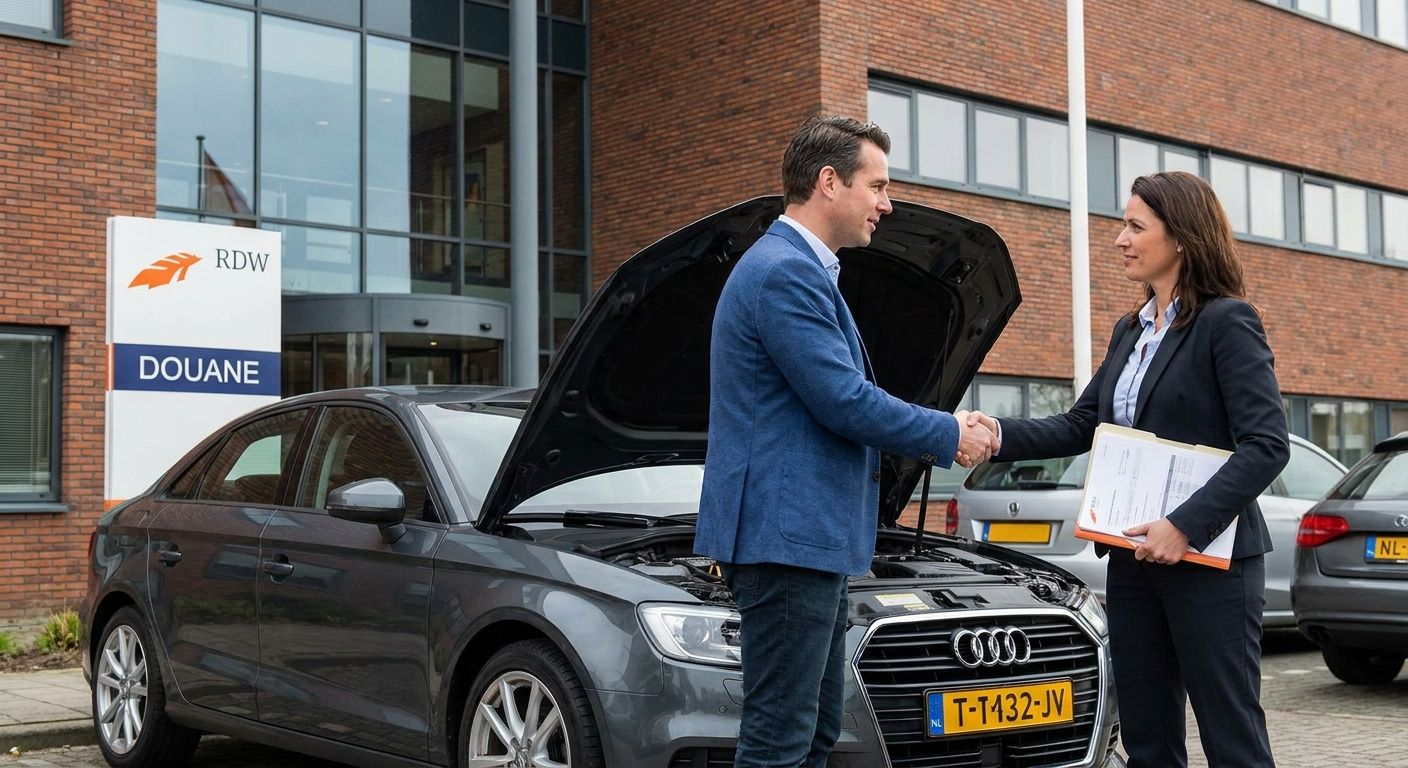
Vehicle import and registration for expats moving to the Netherlands in 2026 means clearing your car through RDW, paying any BPM tax that applies, and swapping foreign plates for a Dutch kenteken before you can legally drive it on Dutch roads. Expats face a hurdle locals skip entirely: RDW will not register a car without a Dutch address and a BSN, and neither exists until your housing paperwork is settled.
- Vehicle import registration for expats in the Netherlands in 2026 requires a BSN and Dutch address before RDW processes anything.
- EU-plated cars clear RDW faster than non-EU imports, which need an individuele goedkeuring approval.
- BPM tax applies when you register a passenger car in the Netherlands, even one you already owned abroad.
- WA liability insurance has to be active before RDW issues Dutch plates -- no insurance, no kenteken.
- Buying locally in 2026 skips RDW paperwork entirely if you're not attached to your current car.
Why vehicle import registration matters for expats
Most guidance on Dutch vehicle registration assumes you already live at a Dutch address with a BSN in hand. Expats rarely start there. If you're mid-move -- relocating to the Netherlands for a new job with a start date already set -- the car import clock and the housing clock run on the same track, and stalling one stalls the other.
RDW, the Dutch vehicle authority, links every registration to a BSN-backed address. Without that pairing, an import sits in limbo no matter how complete your paperwork from abroad looks. This is the single biggest reason expat vehicle imports drag past 2026 relocation timelines: housing gets sorted after the car ships, not before.
“If your BSN and Dutch address aren't confirmed, RDW will not register the car -- no exceptions.”
Confirm your Dutch address and BSN first
- Register with your municipality (BRP) as soon as your lease or temporary housing is confirmed
- Request your BSN at the same appointment -- see how to get a BSN before renting if you haven't started that process
- Hold the car -- don't ship or drive it in -- until the address is confirmed
- Corporate or short-term housing still qualifies for BRP registration if it's your primary address
Work out whether you're importing from inside or outside the EU
- EU-plated vehicles generally move through RDW faster because registration and conformity paperwork are standardized across the bloc
- Non-EU imports need an individuele goedkeuring, a technical approval that checks the vehicle against Dutch standards
- Pull your vehicle's original EU Certificate of Conformity if you have it -- it speeds up the RDW file
- Budget extra weeks for non-EU approval; it is not a same-week process
Arrange mandatory WA liability insurance before you drive
- Get a WA-verzekering (third-party liability) quote lined up before the car lands -- RDW and Dutch police both require active cover
- Use your BSN and Dutch address to apply; most insurers won't quote without them
- Compare at least two Dutch insurers -- expat-specific premiums vary more than locals expect
- If your housing search is still open while the car is en route, closing on a lease first through a platform like Relocify keeps the BSN-and-address requirement from becoming the bottleneck
Get your Dutch banking sorted early
An IBAN speeds up insurance quotes and RDW paperwork alike.
Book your RDW inspection or individuele goedkeuring appointment
- Schedule through an RDW-recognized inspection location -- slots fill up around peak relocation seasons
- Bring the foreign registration certificate, proof of ownership, and your BSN/address confirmation
- For non-EU cars, the individuele goedkeuring check covers emissions, lighting, and construction standards against Dutch rules
- Keep copies of every inspection document -- you'll need them again for BPM and plate issuance
Settle BPM before RDW finalizes registration
- BPM, the Dutch registration tax on passenger cars and motorcycles, is assessed when you register the vehicle in the Netherlands, not when you bought it
- File the BPM declaration with the Belastingdienst (Dutch Tax Administration) as part of the RDW process
- Some transfer-of-residence situations qualify for BPM relief -- check eligibility before assuming the full tax applies
- Get the BPM assessment in writing before you commit to importing rather than buying locally
Get your kenteken and have plates fitted
- RDW issues your Dutch kenteken once BSN, address, insurance, inspection, and BPM are all cleared
- Only RDW-recognized garages can legally fit the physical plates
- Drive on your foreign plates only for the window Dutch rules allow -- don't assume it's indefinite
- Check the APK (roadworthiness test) requirement if the car is already past the age threshold that triggers one
Deregister the vehicle in your home country
- Notify your home country's vehicle authority that the car has left permanently
- Cancel foreign insurance and registration once the Dutch kenteken is active to avoid double coverage
- Keep the deregistration certificate -- Dutch customs or RDW may ask for it during audits
- Update any home-country loan or lease-financing records tied to the vehicle
Comparing your import options
| Option | Best for | Key limitation |
|---|---|---|
| DIY EU import | Expats moving from another EU country with a CE-compliant car | Still requires BSN, address, BPM, and insurance before RDW registers it |
| DIY non-EU import | Expats attached to a specific vehicle they already own | Individuele goedkeuring adds real time and technical scrutiny |
| Import/customs agent | Expats who want RDW and Belastingdienst paperwork handled for them | Doesn't remove the BSN/address prerequisite, only the admin load |
| Buy locally in the Netherlands | Expats without strong attachment to their current car | Means selling or storing the old vehicle abroad |
Verdict: if the car isn't specialized or sentimental, buying Dutch-registered from day one in 2026 beats importing on both time and paperwork.
Common mistakes expats make importing a vehicle
- Shipping the car before the BSN and address are confirmed. RDW registration stalls indefinitely without both, and storage costs pile up while you wait.
- Assuming EU registration papers transfer automatically. They speed up the process; they don't skip individuele goedkeuring or BPM.
- Driving on foreign plates past the legal window. This is the fastest way to a fine during a routine stop.
- Skipping insurance quotes until the car has already landed. WA cover needs a BSN and address to price properly -- leaving it late adds weeks.
- Underestimating BPM. Expats who assume a car "already owned" skips Dutch registration tax get an unwelcome bill mid-process.
FAQ
Do I need a BSN to register a car in the Netherlands?
Yes -- RDW will not issue a Dutch kenteken without a BSN tied to a Dutch address. Get BRP and BSN registration done before the car arrives, not after.
Is BPM tax due if I already owned the car abroad?
Usually yes -- BPM is assessed when a passenger car is registered in the Netherlands, regardless of when or where you bought it. Some transfer-of-residence cases qualify for relief, so check eligibility before assuming the full tax applies.
Can I drive my car on foreign plates while I wait for RDW?
Only for a limited window set by Dutch rules, not indefinitely. Confirm the exact allowance for your plate's country before relying on it.
What's the difference between importing from an EU country and a non-EU country?
EU imports move through RDW faster because registration and conformity paperwork are standardized across the EU. Non-EU imports need an individuele goedkeuring, a technical approval checking the car against Dutch standards.
Do I need Dutch insurance before RDW registers the car?
Yes -- WA liability insurance has to be active before RDW issues plates, and most insurers require a BSN and Dutch address to quote it.
Is it cheaper to import my car or buy one in the Netherlands?
It depends on the car's value and how far along your import paperwork already is, but buying locally skips BPM assessment delays, individuele goedkeuring, and shipping costs entirely.
When is an APK roadworthiness test required after import?
Once the car is registered on a Dutch kenteken and past the age threshold Dutch rules set for APK, it needs a valid test before staying on the road.
Can I start the vehicle import process before I have signed a lease?
You can gather documents and get insurance quotes, but RDW won't complete registration until you have a confirmed Dutch address and BSN, which normally follow your lease.
One last thing
Expats on the fence about importing usually gain more by selling the car at home and buying locally once their Dutch address is settled. Non-EU imports especially -- the individuele goedkeuring step alone can outlast the patience most people budget for a 2026 relocation timeline. If the car isn't sentimental or specialized, buying Dutch-registered from day one skips the BSN-BPM-insurance chain entirely.