Renting an apartment in the Netherlands as an expat in 2026 means moving faster than most Dutch renters ever have to, because landlords in Amsterdam, Utrecht, and Rotterdam routinely fill a listing within 48 hours of posting it. This guide walks through the paperwork, the viewing process, and the contract details that trip up internationals who try to do this from abroad.
- Renting an apartment in the Netherlands as an expat requires proof of income, ID, and often a Dutch bank account before landlords will even schedule a viewing.
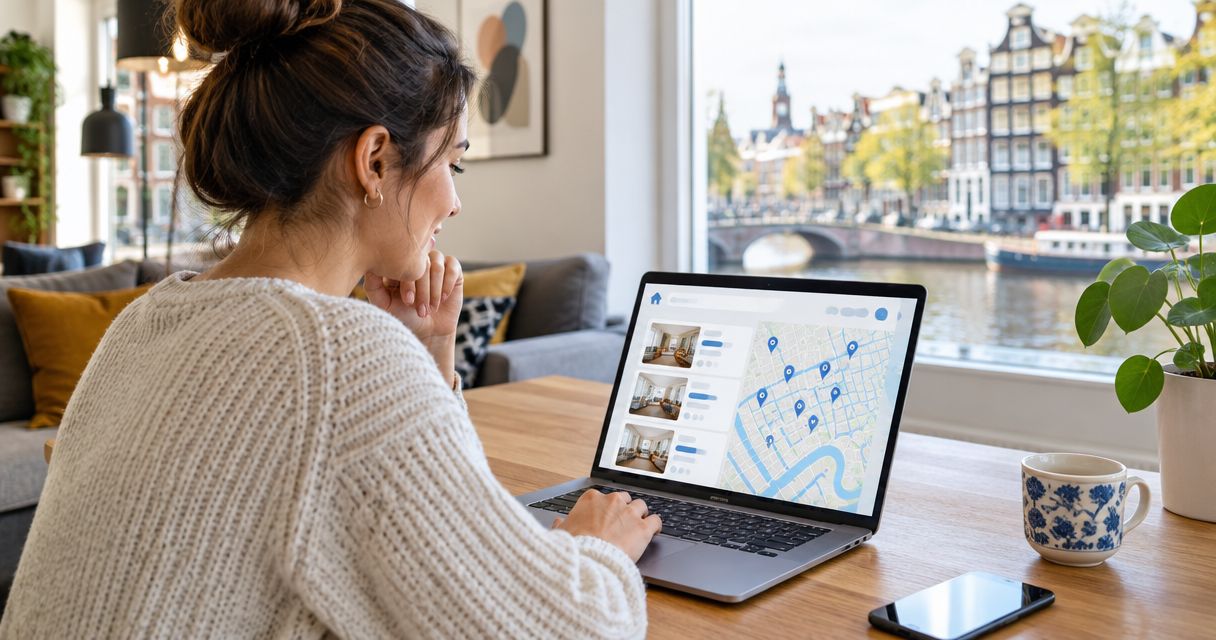
- Virtual tours through a platform like Relocify let you view and shortlist units before you land, which matters when good listings close in under 48 hours.
- Budget four to eight weeks of active searching in 2026 and set aside one to two months' rent for deposit plus any agency fee.
- Register with the gemeente within five days of moving in — skipping this blocks your BSN-linked services.
- Read the lease type before signing: fixed-term contracts under the Affordable Rent Act now cap rent on far more mid-market units than they did a few years ago.
Why this matters
The Dutch rental market runs on speed and paperwork, not charm. A landlord choosing between ten applicants for one unit will filter out anyone who can't produce income proof, a BSN, or a Dutch bank account on day one — and expats who haven't landed yet are structurally at a disadvantage unless they front-load the process. Getting the sequence right (documents first, viewings second, offer third) is what separates a signed lease in three weeks from a frustrating two-month search from a hotel room.
What you'll need
- Valid passport or EU ID and, if you have one already, your BSN (Dutch citizen service number)
- Proof of income: recent payslips, an employment contract, or an employer letter confirming salary and start date
- A Dutch bank account, or evidence you're opening one — most landlords won't accept a foreign IBAN for rent payments
- References from a previous landlord or employer, especially for private rentals outside agency-managed buildings
- Deposit funds: commonly one to two months' rent, held until move-out
- Four to eight weeks of lead time before your intended move-in date — the 2026 market rewards early searchers, not last-minute ones
- Access to a platform that aggregates verified listings and lets you view remotely, which is exactly the gap Relocify fills for internationals who can't fly in for every viewing
The steps
1. Calculate what you can actually afford
Most Dutch landlords and agencies apply an income rule: your gross monthly salary needs to be roughly three to four times the monthly rent before they'll consider your application. This isn't negotiable in most agency-managed buildings, though private landlords sometimes flex it for a guarantor or extra deposit. Run this math before you fall for a listing you can't qualify for — it's the single most common reason applications get rejected outright. Common mistake: applying with gross freelance revenue instead of net, verifiable income; agencies want payslips or a signed contract, not invoices.
2. Assemble your rental dossier before you search
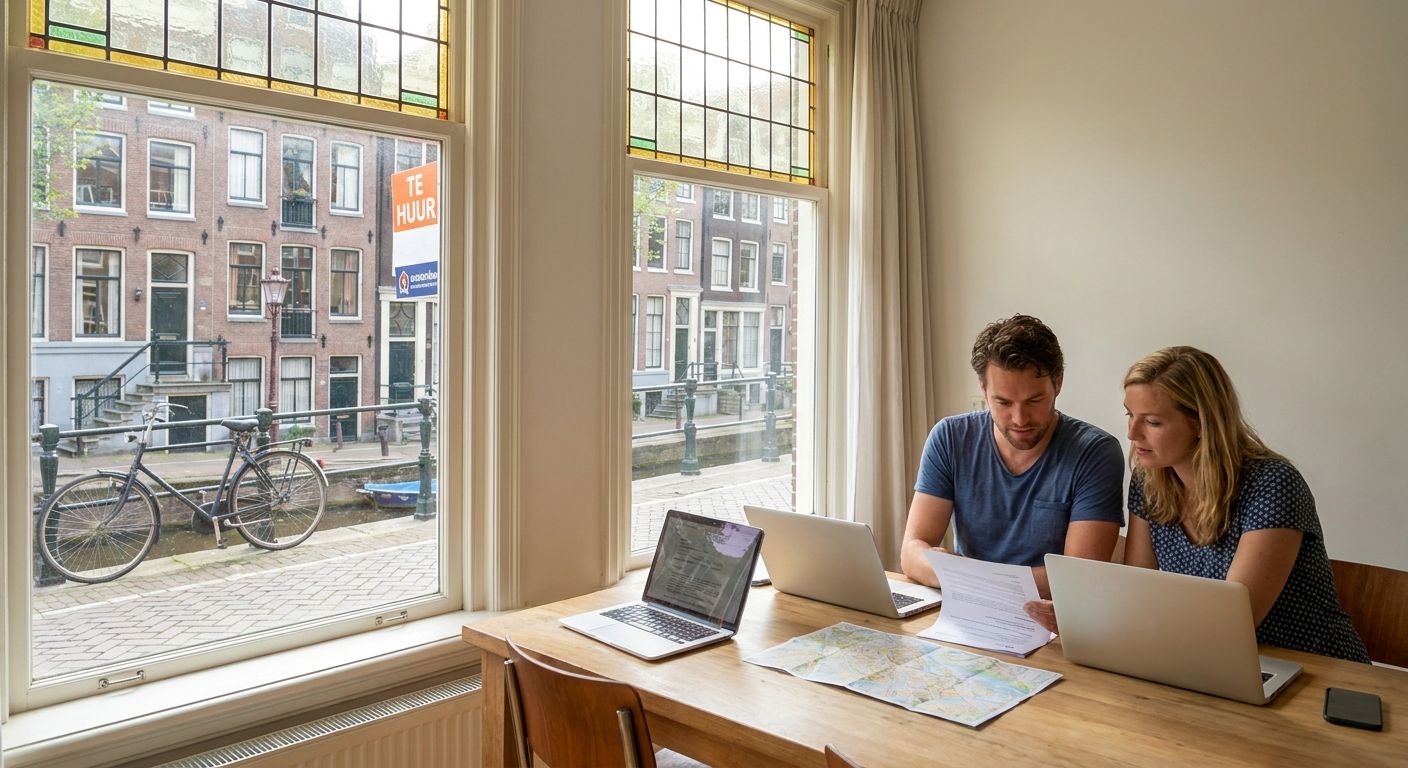
Build one folder with your passport scan, last three payslips or your employment contract, a short cover letter explaining your move date and job, and any references. Applicants who attach this dossier to the first message get responses; applicants who wait to be asked usually lose the unit to someone faster. Common mistake: waiting until a landlord requests documents to start gathering them — by then the unit is gone.
3. Search verified listings, not random Facebook groups
Open Facebook and WhatsApp expat groups are flooded with fake listings that ask for a deposit before any viewing — a classic scam pattern in the Dutch market. Stick to established housing sites and platforms that aggregate agency and landlord listings directly, which cuts your exposure to fraudulent posts and duplicate ads. Common mistake: wiring a deposit to "secure" a viewing for a unit you've never seen in person or on video.
4. Do a virtual walkthrough before you commit
If you're still abroad, a live or recorded virtual tour tells you more than photos ever will: room proportions, natural light, noise from the street, actual condition of the kitchen. Relocify's virtual-viewing model exists specifically because expats can't hop on a train to see a fifth-floor walk-up in Utrecht before their visa appointment. Use the walkthrough to rule units out fast, not just to shortlist them. Common mistake: judging square footage from photos alone — Dutch listings often quote floor area including stairwells and storage that eat into livable space.
5. Submit your offer within hours, not days
Once you've confirmed a unit fits, submit your dossier and offer the same day. In competitive cities in 2026, agencies often close applications the evening a listing goes live. A complete, fast application beats a slightly higher offer submitted two days late. Common mistake: negotiating rent down before you've even been shortlisted — it signals you're not a serious, ready-to-move applicant.
6. Read the lease type and rent clauses line by line
Dutch leases come in a few flavors: indefinite contracts, fixed-term contracts (often capped at two years for a single tenant), and diplomatenclausule leases for temporary international assignments. Since the Affordable Rent Act extended rent-point regulation into more of the mid-market segment, some units that used to be freely priced now carry a maximum rent tied to a points system — check whether the asking rent aligns with that cap before you sign. Common mistake: signing a fixed-term contract without checking the notice period and renewal terms, then getting blindsided when it doesn't auto-renew.
7. Register with the gemeente within five days
Once you've moved in, register your address at the local municipality (gemeente) within five days. This registration is what triggers or updates your BSN and unlocks everything downstream: bank accounts, health insurance, a Dutch phone contract, even a library card in some cities. Common mistake: assuming online pre-registration counts — most gemeentes still require an in-person appointment to finalize it.
8. Set up utilities, insurance, and banking in the right order
Gas, water, and electricity contracts, plus mandatory Dutch health insurance, typically require a registered address and a BSN. Line these up the same week you register, since insurance in the Netherlands runs on a compliance clock — gaps in coverage can trigger back-payments. Common mistake: delaying health insurance signup past the standard window after registration, which can mean paying a penalty on top of retroactive premiums.
Find your Dutch rental remotely
Browse verified listings and book a virtual tour before you land.
Troubleshooting
- You don't meet the income-to-rent ratio. Offer a guarantor (a Dutch resident willing to co-sign) or ask if your employer will issue a formal income guarantee letter — both are common workarounds agencies accept.
- A listing asks for a deposit before any viewing. Walk away. Legitimate landlords and agencies never take money before a viewing, virtual or otherwise.
- You don't have a BSN yet. You can often start a rental application with a job offer letter and passport; the BSN gets finalized at gemeente registration once you've moved in.
- The lease says "diplomatenclausule." This means the landlord can reclaim the unit for the original occupant when they return — fine for a short-term posting, risky if you need multi-year stability.
- You're losing bidding wars to faster applicants. Pre-approve your dossier and use remote viewings to compress your decision time to hours, not days — speed is the actual competitive lever in 2026's market, not a higher offer.
- The rent looks high for a regulated points-system property. Cross-check the address against the applicable rent-point rules before signing; you may have grounds to challenge the price after moving in.
Tools and resources
- A rental aggregator with virtual tours and remote signing — Relocify covers this end to end for internationals moving to the Netherlands
- Your gemeente's official website for registration appointment booking
- A Dutch health insurer comparison tool, once you have your BSN and address
- A checklist of required documents saved as PDFs, ready to attach to every application
What to do next
Once your dossier is ready, start shortlisting units through virtual tours rather than waiting for an in-person trip — in a market where listings disappear within 48 hours, the applicant who's already viewed the unit remotely and can sign that week wins. Relocify's model is built around exactly that sequence: view, decide, sign, without a flight.
FAQ
How much income do I need to rent an apartment in the Netherlands as an expat?
Most landlords and agencies want your gross monthly income at roughly three to four times the monthly rent. Below that threshold, a guarantor or an employer income letter usually gets your application considered.
Can I rent an apartment in the Netherlands without a BSN?
You can start and often complete an application without a BSN, since it's typically issued when you register your address at the gemeente after moving in. Some landlords will hold a unit pending that registration.
Is it possible to rent an apartment in the Netherlands remotely, before arriving?
Yes — virtual tours and remote lease signing, offered through platforms like Relocify, let you view and sign for a unit before you land in 2026. This is now standard practice for internationals relocating without a prior scouting trip.
What's the difference between a fixed-term and indefinite rental contract in the Netherlands?
A fixed-term contract runs for a set period, often up to two years for a single tenant, and doesn't automatically renew. An indefinite contract continues until either party gives proper notice, offering more long-term security.
How long does it take to rent an apartment in the Netherlands as an expat?
Budget four to eight weeks of active searching in 2026's tight market, longer in Amsterdam and Utrecht. Applicants with a complete dossier and remote-viewing flexibility close faster than those waiting for in-person trips.
Are Facebook housing groups safe for finding a rental in the Netherlands?
Treat them with caution — they're a common source of scam listings that request deposits before any viewing. Verified aggregator platforms and agency-managed listings carry far less fraud risk.
What is a diplomatenclausule in a Dutch rental contract?
It's a clause letting the landlord reclaim the property once the original occupant (often posted abroad) returns. It's common in furnished, temporary rentals and worth avoiding if you need multi-year housing stability.
Do I need a Dutch bank account to rent an apartment in the Netherlands?
Most landlords require rent payment from a Dutch IBAN, so open an account as early as possible in your move. Some banks let you start the process before you've registered an address, which speeds up the whole timeline.
One last thing
The Affordable Rent Act extended the rent-point system into a much larger slice of the mid-market in recent years, meaning units that used to be freely priced now carry an enforceable rent cap — check the points calculation on any "unregulated-looking" apartment before you assume the asking price is final. It's the single detail expats overlook most, and it can save real money over a two-year lease.