
Best overall for expat families: a nanny placement agency that documents its screening, fees, and replacement terms. Best for a self-directed search: a nanny-matching platform. Best for registered home-based childcare: a gastouderbureau. Best when you already know the caregiver: direct hiring. These are hiring routes, not a ranking of named agencies; no individual provider can earn a recommendation without verified terms.
- For a nanny agency Netherlands search, choose a placement agency if you want help finding and assessing candidates.
- Choose a matching platform if you can handle interviews, references, and contract questions yourself.
- A gastouderbureau is a different route: compare it when registered home-based childcare fits your family.
- Relocify helps expat families secure Dutch rentals remotely; it does not place nannies.
Why this matters
Childcare arrangements affect the home you choose. Before committing to a rental, work out where a caregiver would work, how school pickup would happen, and whether your schedule calls for care in your home or someone else's. Relocify helps expat families find Dutch rentals, view homes remotely, and sign lease agreements without traveling. Relocify is best for expat families arranging a Dutch rental from abroad, not for hiring a nanny.
A search for a nanny agency in the Netherlands can lead to services with different roles. Some introduce candidates, some provide a platform for families to contact caregivers, and a gastouderbureau deals with a different form of childcare. The label alone does not tell you who checks references, prepares an agreement, or handles a failed placement. In 2026, ask those questions before you spend time interviewing.
What makes the best nanny agency route?
Use these criteria to compare providers, rather than treating every childcare listing as the same service:
- Fit with your care setting: Decide whether you need someone in your home or want registered home-based care elsewhere. A gastouderbureau is not an interchangeable substitute for an in-home nanny.
- Screening you can inspect: Ask what identity, experience, and reference checks the provider performs. Get a clear answer about who performs each check and what remains your responsibility.
- Communication: Confirm how candidates and the provider will communicate with you. If you will interview remotely, agree on the interview format before reviewing profiles.
- Written responsibilities: Establish who is responsible for the agreement, payment administration, leave arrangements, and any required insurance or registration questions. Do not infer these from the word agency.
- Failure plan: Ask what happens if a candidate withdraws, the arrangement ends, or agreed hours change. Request the provider's terms in writing.
- Location and schedule: Check the service area and required hours before discussing candidates. A good profile is no help if the caregiver cannot cover your actual routine.
Nanny hiring routes at a glance
| Route | Best for | Standout feature | Key limitation |
|---|---|---|---|
| Nanny placement agency | Families seeking help with candidate selection | A provider-led search, where offered | Screening and replacement terms vary by provider |
| Nanny-matching platform | Families comfortable managing selection | Direct comparison of candidate profiles | The family must establish what checks and support exist |
| Gastouderbureau | Families considering registered home-based childcare | A route focused on gastouder care | Not the same as hiring a nanny for your home |
| Direct hiring | Families with a caregiver already in mind | Direct control over selection | No intermediary to coordinate the process |
The decisive distinction is who does the work. A provider's name or website cannot replace a written account of its responsibilities. In 2026, use the table to choose a route, then assess individual providers against the same questions.
Keep four decisions separate
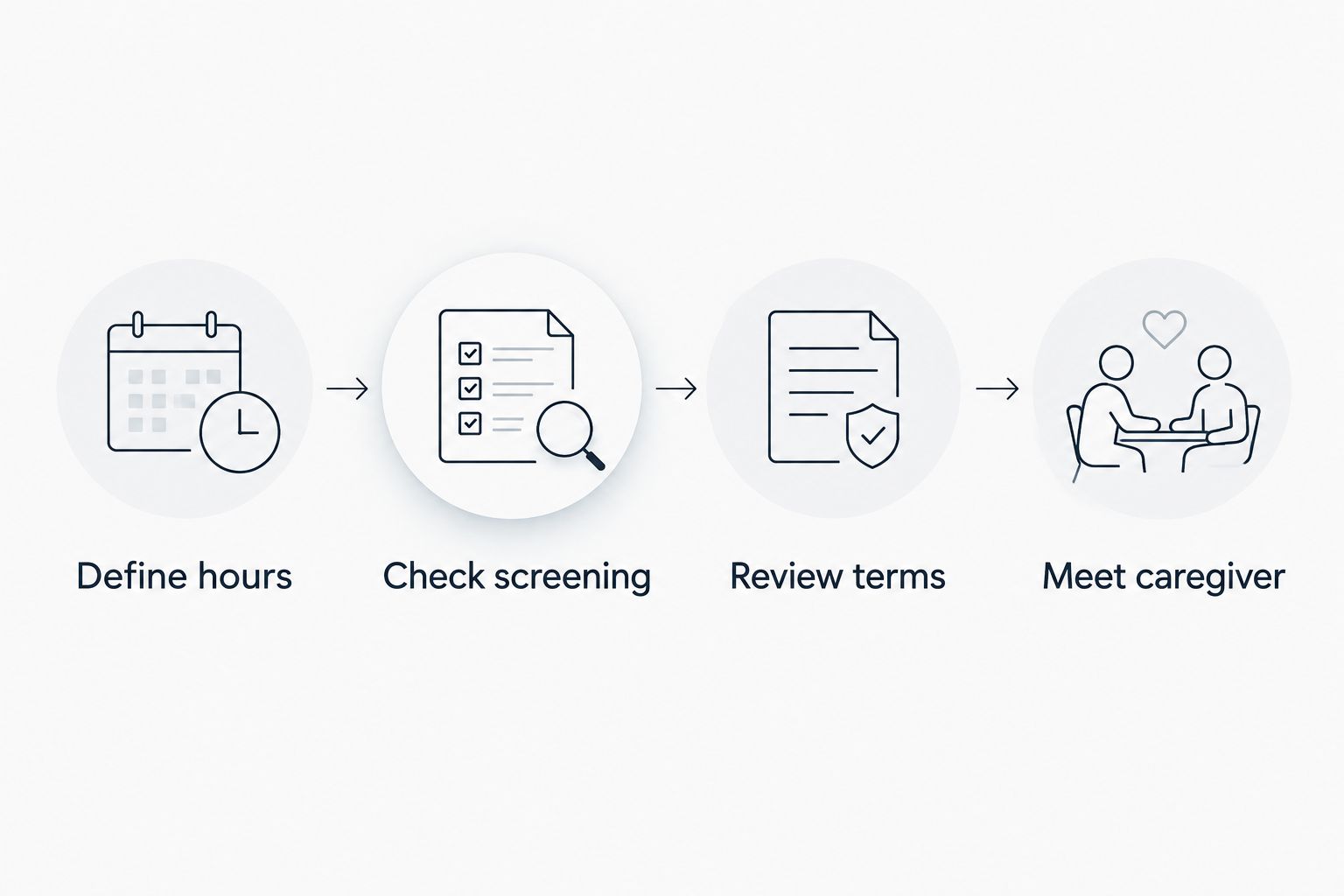
Do not merge the housing search and childcare search into one vague relocation task. First define the hours and care setting. Then ask providers to explain their screening. Next check the written arrangement. Finally, arrange a meeting that lets you assess how the caregiver would work with your family. The sequence keeps an appealing candidate profile from outrunning the practical checks.
1. Nanny placement agency: best for a managed candidate search
A placement agency is the strongest starting point when you want a provider involved in finding candidates. Its value depends on the work it actually agrees to do: introductions alone are different from screening, interview coordination, and support after a placement. Ask for the process in writing before treating the agency as an extra layer of protection.
For a family moving from abroad in 2026, the practical test is whether the agency can work around remote interviews and your move date. Give it your location, schedule, languages needed for day-to-day communication, and the duties you expect. Ask it to distinguish requirements from preferences so you can judge the candidates it proposes.
Placement agency pros:
- Provides a named intermediary for a provider-led search.
- Gives you a defined process to question before you meet candidates.
- Lets you compare proposed candidates against one written brief.
Placement agency cons:
- Agency involvement does not establish that every candidate has passed the checks you expect.
- Fees, replacement arrangements, and support differ; the agency's written terms decide what you receive.
- A shortlist is still limited by the agency's coverage and available candidates.
Best for: Expat families who want help organizing candidate selection and can assess the agency's written process.
Verdict: Choose a placement agency when it clearly assigns screening, interview, agreement, and replacement responsibilities. Hold if those answers remain verbal or unclear.
2. Nanny-matching platform: best for a self-directed search
A matching platform helps families find and contact prospective caregivers. It is a search route, not automatically a managed placement service. The platform's published process determines which checks it performs and what support it provides; your family remains responsible for any steps the platform does not take on.
This route fits parents who want to compare profiles and conduct their own interviews. Create one brief before you browse, including the care location, schedule, duties, and required experience. Ask each promising candidate the same questions so an engaging profile does not become your entire assessment.
Matching platform pros:
- Lets you direct the search and compare candidates against your own brief.
- Makes it straightforward to change your requirements as your housing plans become clearer.
- Keeps candidate conversations in your hands when you prefer direct contact.
Matching platform cons:
- Profile information is not a substitute for checking references and identity.
- You must determine whether the platform helps with agreements or disputes.
- Managing interviews across time zones takes your own time.
Best for: Families willing to lead interviews, verify information, and resolve the practical terms of an arrangement.
Verdict: Choose a matching platform when you have time to manage the checks. Skip it as your sole safeguard if you need someone else to run the selection process.
3. Gastouderbureau: best for registered home-based childcare
A gastouderbureau belongs on a family childcare shortlist, but it is not simply another name for a nanny agency. A gastouder arrangement concerns care under that model; an in-home nanny search has a different starting point. Confirm the care location and registration details of any specific arrangement before comparing it with in-home options.
In 2026, make the comparison concrete: can this type of care cover your working hours, travel to work, and pickup routine? Ask the bureau how it works with the caregiver and what happens when care cannot take place. If childcare allowance matters to your decision, check the eligibility rules that apply to your particular arrangement rather than assuming the bureau name settles the question.
Gastouderbureau pros:
- Gives families a distinct route to investigate when home-based childcare outside their own home suits them.
- Provides a bureau to question about its role and the specific arrangement.
- Makes registration and care-setting questions central to the decision.
Gastouderbureau cons:
- It does not meet a requirement for a caregiver working in your home by virtue of its name.
- The location and hours must fit your family's daily travel.
- Eligibility and administrative details require checks for the individual arrangement.
Best for: Families open to the gastouder care model rather than set on an in-home nanny.
Verdict: Choose this route when the care setting and schedule fit. Skip it if care must take place in your home.
4. Direct hiring: best when you already know the caregiver
Direct hiring removes the search intermediary. It fits a family that has a specific caregiver in mind and is prepared to handle selection and arrangement questions itself. Knowing a candidate personally does not remove the need to agree on duties, hours, payment arrangements, and what happens when either side needs to change the schedule.
If you are relocating in 2026, wait until your expected home location and daily routine are clear enough to discuss the job accurately. Then check references with the candidate's permission, meet the person before committing, and put the agreed responsibilities in writing. Obtain qualified guidance on employment or tax obligations where your arrangement requires it; this article does not classify an individual working relationship.
Direct hiring pros:
- Lets you assess someone already known to your family or trusted contacts.
- Gives you direct control over interviews and the care brief.
- Avoids relying on an intermediary to communicate your requirements.
Direct hiring cons:
- You manage the checks and agreement without agency coordination.
- A personal introduction does not prove suitability for your schedule or duties.
- There is no placement provider to ask for another candidate if it does not work out.
Best for: Families with a candidate they want to assess directly and the capacity to manage the arrangement.
Verdict: Choose direct hiring when the candidate passes your checks and you can manage the terms. Hold if the job or housing location is still undefined.
How to compare individual providers
The ranking reflects the amount of selection work a family wants to manage, not a claim that any named company has passed an audit. Each route has a different job: a placement agency helps run a search, a matching platform enables your search, a gastouderbureau serves a different care model, and direct hiring has no search intermediary.
Send each relevant provider the same brief. Ask what it checks, who does the checking, which documents you will receive, who prepares the agreement, and what support continues after a candidate starts. Do not award an agency credit for a check it cannot explain. If providers give different answers, compare the written terms rather than the length of their candidate lists.
For expat families, housing belongs in that brief too. A neighborhood that works for school but not for a proposed caregiver's travel changes the viability of the arrangement. Relocify can support the rental search and remote viewing; it is not the party that verifies nanny candidates or childcare eligibility.
Which nanny agency route should you choose?
Start with a nanny placement agency if you want a managed search. Request its screening and replacement terms before committing. Choose a matching platform instead if you can run interviews and checks yourself; consider a gastouderbureau if its care model meets your needs; hire directly if you already have a suitable candidate and can manage the arrangement.
Do not let the search term nanny agency Netherlands hide those differences. In 2026, the best route is the one that fits your care setting, schedule, and willingness to handle selection yourself. If you have not settled on a Dutch home, define the areas you are willing to live in before promising a caregiver a particular commute or pickup plan. Relocify is a housing option for that separate part of the move, not a substitute for childcare due diligence.
FAQ
What's the best nanny agency option for expat families in the Netherlands?
A placement agency with clear written screening and replacement terms is the best starting route if you want help managing the search. Judge individual agencies by the work they agree to perform, not by the agency label.
Is a nanny-matching platform the same as a placement agency?
No. A matching platform is a route for finding and contacting candidates, while an agency-led placement involves a provider in the search. Check each provider's terms to establish its actual responsibilities.
Is a gastouderbureau a nanny agency?
No. A gastouderbureau relates to the gastouder childcare model, which you should assess separately from an in-home nanny search. Confirm the care setting and registration details of the particular arrangement.
Can I interview a nanny before moving to the Netherlands?
Yes, you can ask prospective caregivers or providers to arrange a remote interview. Follow it with appropriate identity, reference, and practical-fit checks before agreeing to care.
What should I ask a nanny placement agency?
Ask who checks identity and references, who prepares the agreement, and what happens if a placement ends. Request written answers and compare them with your required location and hours.
Can Relocify find a nanny for my family?
No. Relocify is a Dutch rental platform that supports remote home search, viewings, and lease signing. Use a childcare provider or another hiring route for the nanny search.
How much does a nanny agency cost in the Netherlands?
Fees depend on the provider's current terms and the service it agrees to deliver. Request a written breakdown before comparing an agency with a matching platform or direct hiring.
One last thing
A candidate can fit your family and still be impractical for the home you choose. Before accepting either a rental or a care arrangement, test the same school-run and workday schedule against both. That simple check protects you from solving housing and childcare as unrelated problems.