Picking the right city or neighborhood is the single decision that determines whether your Dutch rental experience feels manageable or miserable, and it matters more than almost anything else in the application itself.
- Commute radius and budget eliminate 80% of cities before you even open a listing site.
- Amsterdam and Utrecht rent for a premium in 2026; Rotterdam and The Hague still offer more space for the same money.
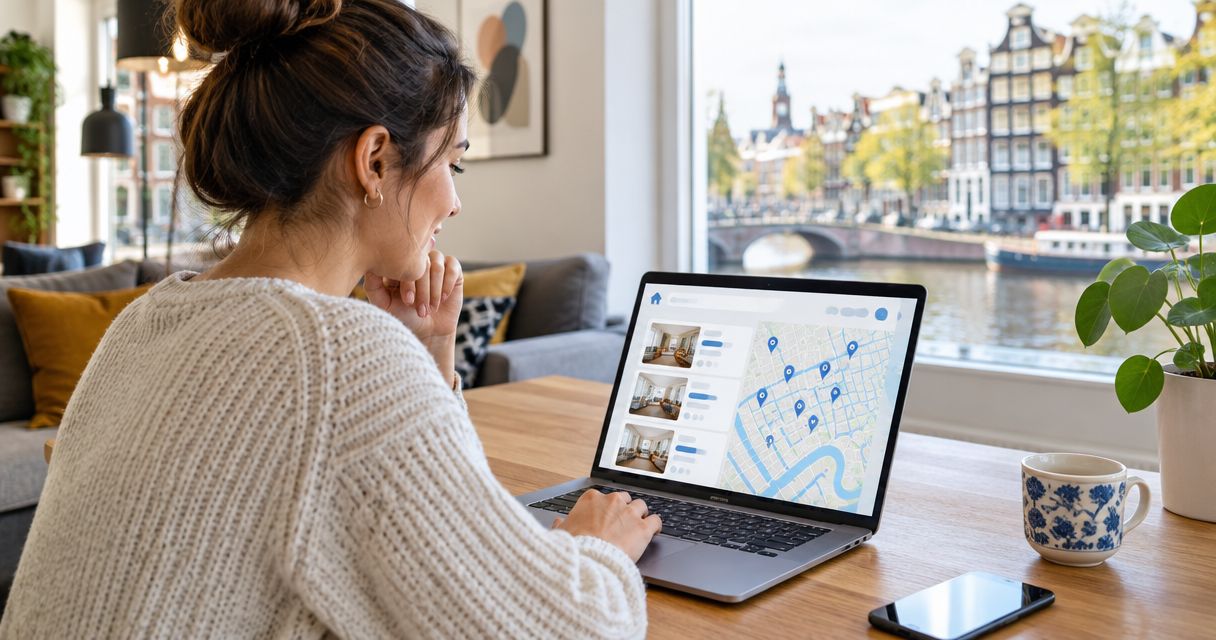
- Virtual tours through a platform like Relocify let you shortlist neighborhoods without burning a flight to view a studio that gets rented in 48 hours.
- Lease speed in the Randstad in 2026 rewards decisive applicants - indecision costs you the apartment, not the deposit.
- BRP registration and commute time matter more than a neighborhood's Instagram appeal once you actually live there.
Why this matters
Choosing an area to live in the Netherlands isn't a lifestyle exercise - it's a filter that determines your commute, your rent, your school options, and how fast you can actually sign a lease in 2026's tight rental market. Get the area wrong and you're stuck renegotiating your life six months into a 12-month contract. Get it right before you start applying, and every other step - budgeting, viewings, document prep - gets faster because you're not chasing listings across four cities at once.
Most expats relocating to the Netherlands in 2026 make this decision backwards: they browse listings first and pick a neighborhood by accident. Relocify exists specifically to flip that order - narrow the area first, then let virtual tours and aggregated listings do the legwork instead of you flying in for six viewings that don't pan out.
What you'll need
- Your work address or a realistic estimate of where you'll be commuting to
- A monthly rent ceiling, including utilities (budget 60-90 extra per month for gas, water, and electricity outside Amsterdam's city center)
- A list of non-negotiables: international school proximity, pet policy, furnished vs. unfurnished, parking
- 30-45 minutes to check train and bike times on the NS travel planner between candidate cities and your work location
- A BSN (citizen service number) timeline, since some municipalities require BRP registration before you can even sign
- Access to a platform that aggregates listings and offers virtual tours, so you can compare neighborhoods without a flight
The steps
1. Define your commute radius before you look at a single listing
Start with your office address, not the city you've heard the most about. The Netherlands is small enough that a 30-minute train ride from Utrecht or Haarlem into Amsterdam is a normal daily commute, and it opens up rent that's meaningfully lower than living in the city center itself. Draw a 45-minute commute radius using train and bike times, not driving distance - Dutch commuting runs on rail and bikes, not highways. Common mistake: picking a city based on where friends live instead of where the trains actually run on time to your office.
2. Set a rent ceiling per city, not per apartment
Rent for a comparable one-bedroom varies significantly between Amsterdam, Rotterdam, Utrecht, and The Hague as of 2026, so a single national budget number doesn't work. Check 15-20 live listings in each candidate city before committing to one, so your budget reflects 2026 reality instead of a number you remember from a blog post written years ago. Expected outcome: a shortlist of 2-3 cities where your budget actually clears the median asking rent, not just the cheapest outlier listing.
3. Map school and family logistics if you're relocating with kids
If you need an international school, the Netherlands has a handful of concentrated clusters - The Hague, Amsterdam-South, and parts of Utrecht - and living outside a 30-minute radius of one turns daily life into a logistics problem. Call or email the school directly to confirm catchment expectations before you lock in a neighborhood; some schools give admissions priority to families living nearby. Common mistake: assuming any Dutch city has equal international school access - it doesn't.
4. Research neighborhood character beyond the listing photos
Photos and floor plans tell you nothing about noise levels, bike traffic, or whether the street empties out after 9pm. Cross-reference the neighborhood name with recent expat forum threads and municipal safety data before you fall for a listing based on natural light alone. A virtual tour solves half this problem - walking through a unit on video shows you the street, the stairwell, and the immediate block in a way static photos never do. Expected outcome: you rule out at least one neighborhood that looked perfect in photos but doesn't match your daily routine.
5. Check how fast the local market moves
Some Dutch rental markets in 2026 move fast enough that a well-priced apartment gets multiple applications within 24-48 hours of listing. If your target area is one of them, you need documents ready before you view, not after. Have your income proof, employment contract, and ID scanned and ready to attach to an application the same day you view a unit. Common mistake: treating the Dutch process like a slower rental market where you can think it over for a week.
6. Tour remotely before you commit to a flight
Booking a flight to view five apartments across three cities burns money and time you don't need to spend in 2026. A remote viewing narrows your list to the two or three units worth an in-person visit, or worth signing sight-unseen if the tour is thorough enough. Relocify's virtual tour process lets you walk a unit's rooms, check natural light direction, and see the building entrance before deciding whether it's worth pursuing further. Expected outcome: you cut your candidate list from ten listings to three without leaving your current country.
7. Confirm lease terms and registration requirements for the area
Registration (BRP) rules and landlord requirements can differ slightly by municipality, and some landlords want proof of registration before signing while others require the signed lease first. Confirm which order applies in your specific city before you're mid-negotiation. Common mistake: assuming every Dutch municipality processes BRP registration on the same timeline - some take days, others take weeks in 2026.
8. Apply the moment you've confirmed the area works
Once your shortlist is set, speed becomes the deciding factor over preference. A slightly-less-perfect apartment you can sign on today beats a perfect one you're still debating a week from now. Expected outcome: a signed lease in an area that matches your commute, budget, and lifestyle constraints - without a wasted flight.
Compare areas without flying in
Browse aggregated listings and take virtual tours before you commit to a city.
Troubleshooting
- I keep losing out on apartments in my chosen area. Your documents aren't ready fast enough - have income proof, ID, and employment contract pre-scanned so you can apply within hours, not days, of a listing going live in 2026's competitive market.
- My commute is worse than I expected after moving in. You calculated distance instead of actual transit time - always check the NS travel planner for door-to-door time, including transfers, before signing.
- The neighborhood felt different in person than in photos. This is why a virtual tour beats static photos - it shows the street, light, and noise level a listing photo can't capture.
- I can't get a landlord to respond about registration timing. Ask directly and in writing whether BRP registration happens before or after signing - this varies by landlord and by municipality, and assuming the wrong order delays your move-in.
- My budget covers rent but not utilities. Add 60-90 per month for gas, water, and electricity outside a city center studio - utility costs shift the true monthly number more than most first-time renters expect.
Tools and resources
- NS travel planner - for real commute times between candidate cities
- Municipal BRP registration pages - for area-specific timing rules
- International school admissions pages - for catchment and priority policies
- Relocify - aggregated Dutch rental listings with virtual tours and remote lease signing, available through Relocify Search for a self-managed process or Relocify Plus if you want a team finding the apartment for you
What to do next
Once you've narrowed your area, the next bottleneck is document prep - income proof, employer letters, and ID need to be ready before you apply, not after a viewing. That's the step that decides whether you win or lose a fast-moving 2026 listing.
FAQ
What's the best area to live in as an expat in the Netherlands?
There is no single best area - it depends on your commute radius, budget, and whether you need international school access. Amsterdam suits short commutes at a premium price, while Utrecht and Haarlem offer a 20-30 minute train commute at lower rent in 2026.
Is Rotterdam better than Amsterdam for expats?
Rotterdam generally offers more space per euro than Amsterdam in 2026, but Amsterdam has a denser expat community and more international employer offices. Pick based on your commute and budget, not general reputation.
How much does rent cost in different Dutch cities in 2026?
Rent varies by city and neighborhood, with Amsterdam and Utrecht typically pricing higher than Rotterdam, The Hague, or smaller commuter towns. Check 15-20 live listings in your target cities to get a current 2026 range instead of relying on outdated averages.
Do I need to visit the Netherlands in person before signing a lease?
No - virtual tours through a platform like Relocify let you view units and neighborhoods remotely and sign the lease without traveling. Many expats in 2026 complete the entire process, from search to signed contract, without a flight.
How fast do apartments get rented in the Netherlands?
In competitive areas, well-priced listings can receive multiple applications within 24-48 hours in 2026. Having income proof and ID ready before you view is what determines whether you win the unit.
What is BRP registration and when do I need it?
BRP registration is Dutch municipal registration required for a citizen service number (BSN) and other official processes. Timing requirements vary by landlord and municipality, so confirm whether registration happens before or after your lease is signed.
Should I pick a neighborhood based on expat community size?
Expat density matters less than commute time and budget for most people, though it can ease the first few months of settling in. Weigh it as a tiebreaker between two areas that already meet your commute and budget requirements.
What's the difference between Relocify Search and Relocify Plus?
Relocify Search is a self-managed process with AI assistance for finding, viewing, and applying to listings on your own. Relocify Plus is an assisted service where a team finds the apartment for you.
One last thing
The expats who end up happiest with their Dutch address usually didn't pick the city everyone recommends - they picked the commute that actually worked, then let the neighborhood follow from that math. A 30-minute train ride into Amsterdam from Utrecht in 2026 often beats a cramped, overpriced studio inside the city limits, and nobody regrets that trade after the first month.