Enroll your child in a Dutch school by registering with the municipality (gemeente) first, then approaching either a Dutch public school or a private international/bilingual school directly, since public schools take direct registrations while most international schools run their own waitlists. The step people miss: municipal registration must happen within five days of moving into your address, and that registration is what generates the BSN your child's school will ask for on day one.
- Register with the gemeente within 5 days of moving in — this triggers the BSN schools require.
- Dutch public schools are free and Dutch-language; international schools run separate waitlists and charge tuition.
- Compulsory education (leerplicht) starts at age 5, but most children start at 4.
- Kids with limited Dutch often start in a taalklas before joining a mainstream group.
- Amsterdam and The Hague have the tightest international-school waitlists in the Netherlands.
Why this matters
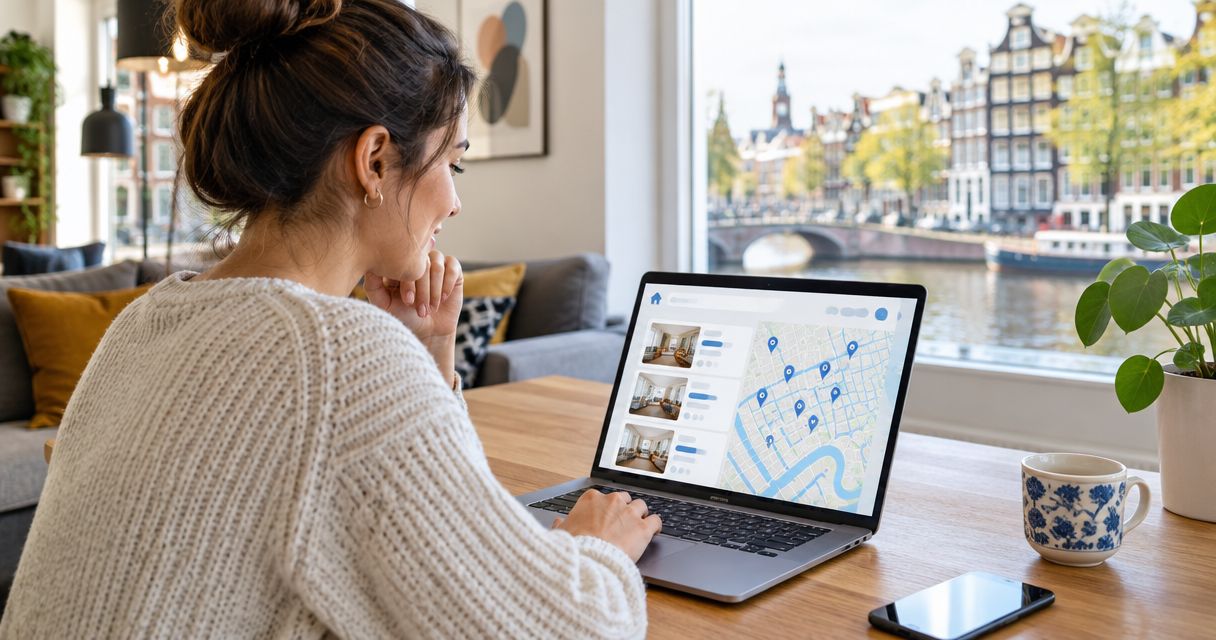
School enrollment and housing decisions are tangled together in the Netherlands more than in most countries. Municipalities often tie public-school placement to postcode, and international schools cluster in specific cities, so where you rent decides which schools are even on the table. Sorting out the right area for your family before you sign a lease saves you from discovering, three months in, that the nearest international school has a full year's wait.
Parents relocating with school-age children in 2026 are dealing with two systems running in parallel: the municipal BRP registration process and the school's own admissions process. Miss either one and enrollment stalls, sometimes into a new term.
How do you enroll children in school after moving to the Netherlands?
The process runs in a fixed order — skipping ahead usually just means backtracking later.
- Register at the gemeente with your rental contract and passports within 5 days of moving into your address. This creates your child's entry in the Basisregistratie Personen (BRP) and generates a BSN (citizen service number).
- Decide on school type: Dutch public or state-funded school (openbare or bijzonder) versus an international or bilingual school. This decision drives everything downstream, including cost and how fast you can start.
- Check the local placement system. Amsterdam and several other cities run centralized or coordinated primary-school admissions rather than pure first-come registration — check the city's education portal before assuming a school will take a direct application.
- Submit the application. For public schools this typically goes straight to the school with the BSN and proof of address. For international and bilingual schools, apply directly to the admissions office — many keep active waitlists that predate your arrival date.
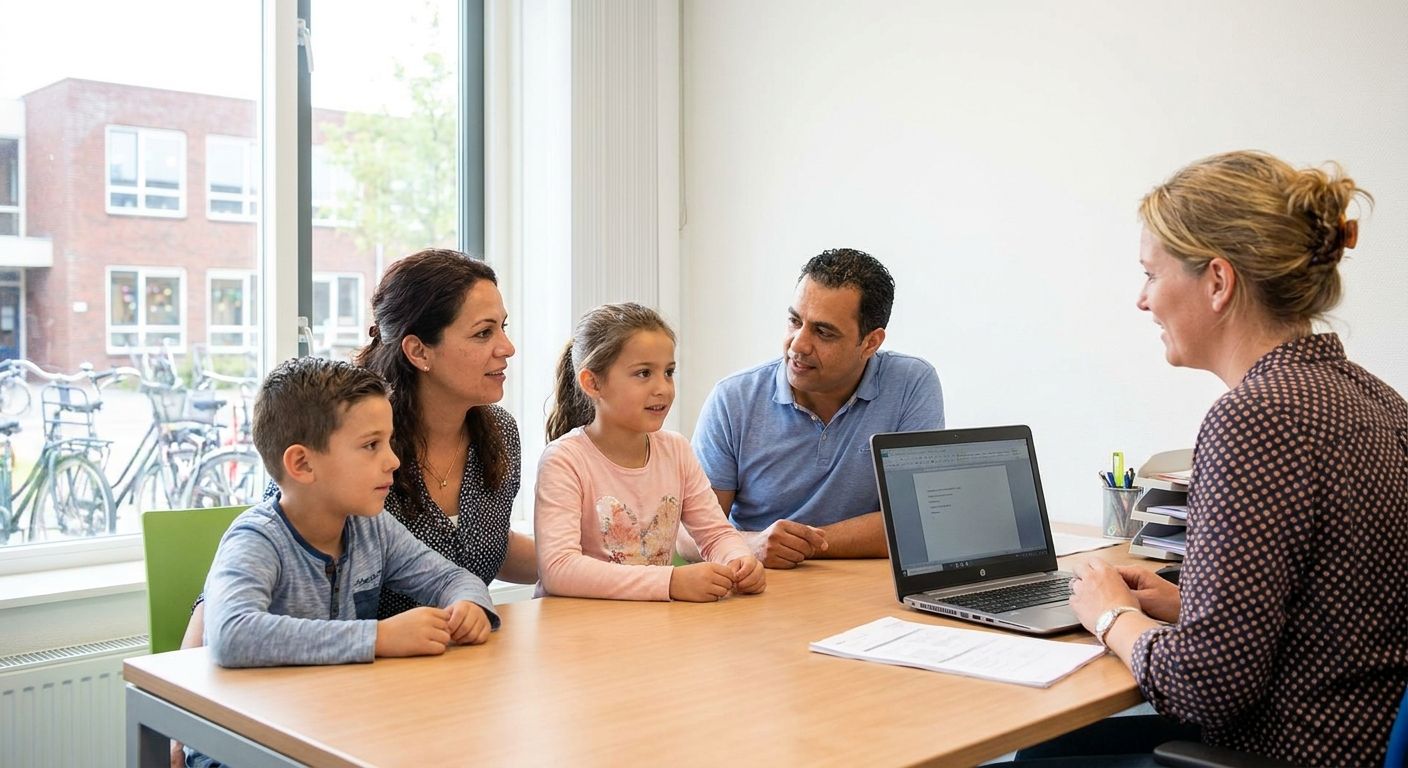
- Attend the intake. Schools assess the child's Dutch level (for public schools) or English level (for international schools) during intake.
- Start in a taalklas if needed. Children with little or no Dutch are often placed in a newcomer class (taalklas, or ISK for secondary-age students) before moving into a mainstream group — standard practice, not a setback.
Dutch public and state schools
Public schools (openbare) and government-funded religious or pedagogical schools (bijzonder — Montessori, Jenaplan, Catholic, Protestant) are tuition-free and teach in Dutch from day one. Best for: families planning to stay long-term and households prioritizing full Dutch-language immersion. The tradeoff is real: a child arriving mid-year with zero Dutch needs a taalklas bridge period before schoolwork clicks.
International and bilingual schools
International and bilingual schools teach in English, or a mix of English and Dutch, and follow curricula like the IB or the British system. Best for: families on shorter assignments, families where the working parent may relocate again, or households prioritizing continuity in an English-medium curriculum. The catch is capacity — the best neighborhoods for expat families in The Hague are popular precisely because they sit near international schools, and that popularity means longer waitlists than a comparable Dutch public school in the same postcode.
| School type | Language | Cost | Waitlist pressure |
|---|---|---|---|
| Public / state (openbare, bijzonder) | Dutch | Free | Low to moderate, depends on postcode |
| International | English | Tuition-based | High in Amsterdam, The Hague, Amstelveen |
| Bilingual Dutch state schools | Dutch + English | Free | Moderate, growing demand |
Why enrollment timelines vary
No two families go through this at the same speed. The gap between a two-week enrollment and a three-month wait usually comes down to a handful of factors:
- City choice — Amsterdam, The Hague, and Amstelveen carry the heaviest demand for international-school seats in the Netherlands.
- Arrival timing — arriving in August or September, at the start of the Dutch school year, is far smoother than a mid-year arrival when classes are already full.
- Age of the child — younger children in group 1-2 (ages 4-5) generally slot in faster than teenagers needing a specific VMBO, HAVO, or VWO track placement.
- BSN turnaround — schools cannot formally enroll a child without a BSN, so any delay at the gemeente pushes the whole timeline back.
- Dutch language level — children needing a taalklas placement first add an extra administrative and scheduling step.
- School type chosen — public schools generally process registrations faster than international schools running long waitlists.
Families relocating for work often underestimate how much area orientation programs for expats shortcut this. Local guides know which schools in a given postcode actually have open seats this term — information that rarely shows up on a school's own website.
Get help settling your family in the Netherlands
Destination support for relocating employees, from housing to local orientation.
Related questions
What age do children start school in the Netherlands?
Compulsory education (leerplicht) starts at age 5, but the vast majority of Dutch and expat children start at 4, the day after their fourth birthday, since group 1 of primary school opens to them at that point. Waiting until 5 is legal but puts a child close to a full school year behind classmates socially and linguistically.
Do expat children have to attend a Dutch public school?
No — expat children can attend a Dutch public school, a bilingual state school, or a private international school, and the choice belongs to the family, not to nationality. The real constraint is not eligibility, it is seat availability at the school you actually want in 2026.
Can a child who doesn't speak Dutch join a mainstream class right away?
Usually a child with little or no Dutch starts in a taalklas or newcomer class first, then transitions into the mainstream group once their Dutch supports the coursework. This bridge period is standard, not a sign the child is behind academically.
FAQ
How do you enroll children in Dutch school as an expat in 2026?
Register with the municipality within 5 days of moving in to get a BSN, then apply directly to a public school or to an international school's admissions office. Public schools generally process faster than international schools, which often run separate waitlists.
How much does international school cost in the Netherlands?
International and bilingual private schools in the Netherlands charge tuition, while Dutch public and state-funded schools are free. Fees vary by school, so check current tuition directly with the school you are applying to.
How long is the waitlist for international schools in Amsterdam?
Waitlists vary by school, grade level, and arrival timing, and demand is consistently highest in Amsterdam, The Hague, and Amstelveen. Applying before you finalize a lease improves your odds significantly.
Do you need a BSN to enroll a child in a Dutch school?
Yes, schools require a BSN to formally enroll a child, and the BSN is issued when you register with the municipality. This is why municipal registration has to happen before you contact schools, not after.
What is a taalklas in the Netherlands?
A taalklas is a newcomer class that teaches Dutch to children who do not yet speak it well enough for mainstream schooling. Children typically join a taalklas first, then move into a regular class once their Dutch is strong enough.
Can you choose which Dutch public school your child attends?
In many cities you can apply to any public school, but several cities including Amsterdam run centralized placement systems that weigh postcode and sibling priority. Check your city's education portal before assuming direct registration will work.
What documents do you need to enroll a child in a Dutch school?
Schools generally ask for the child's BSN, proof of address, passport, and prior school records or a transfer letter from the previous school. International schools may also ask for test scores or a school reference depending on grade level.
Is Dutch primary school free for expats?
Yes, Dutch public and state-funded primary and secondary schools are free for all residents, including expat families, regardless of nationality. Only private international schools charge tuition.
One last thing
Most expat parents chase the school first and the address second — flip that order. Because several Dutch cities tie public-school placement to postcode and international schools cluster in specific neighborhoods, locking in housing near your target school before you register beats arguing your way onto a waitlist after the fact. If you are still narrowing down where to live in 2026, relocating to the Netherlands for a new job covers the sequencing that matters before school registration ever comes into play. Relocify handles the housing half of that sequence — including remote viewings and lease signing from abroad — so the school application is not waiting on a flight.