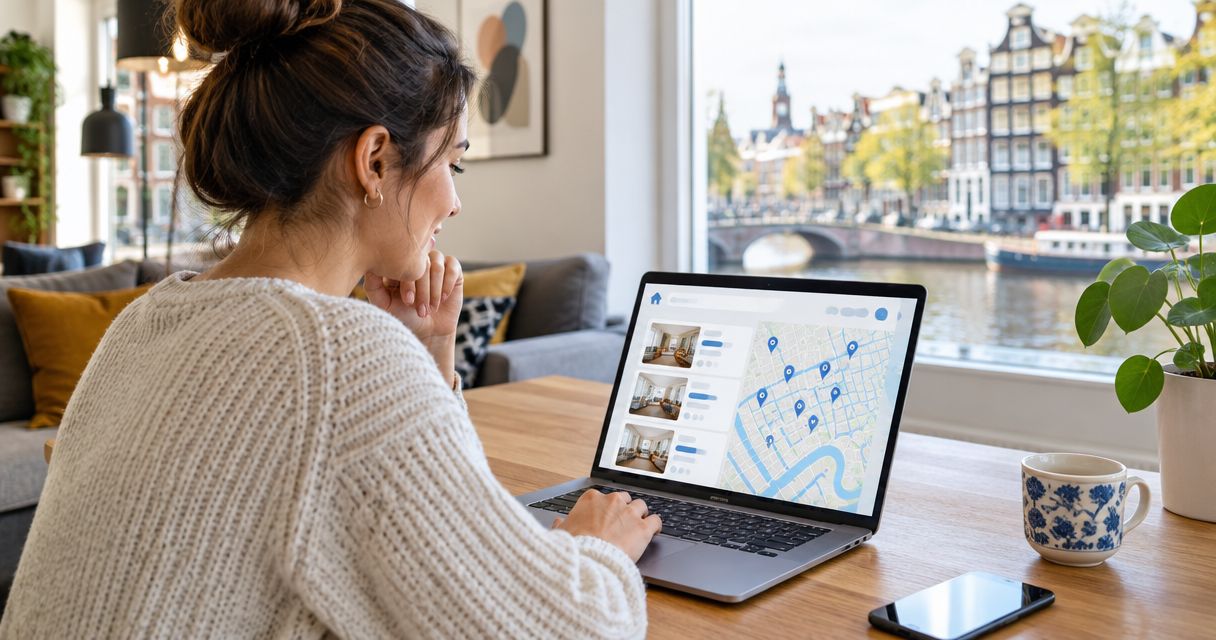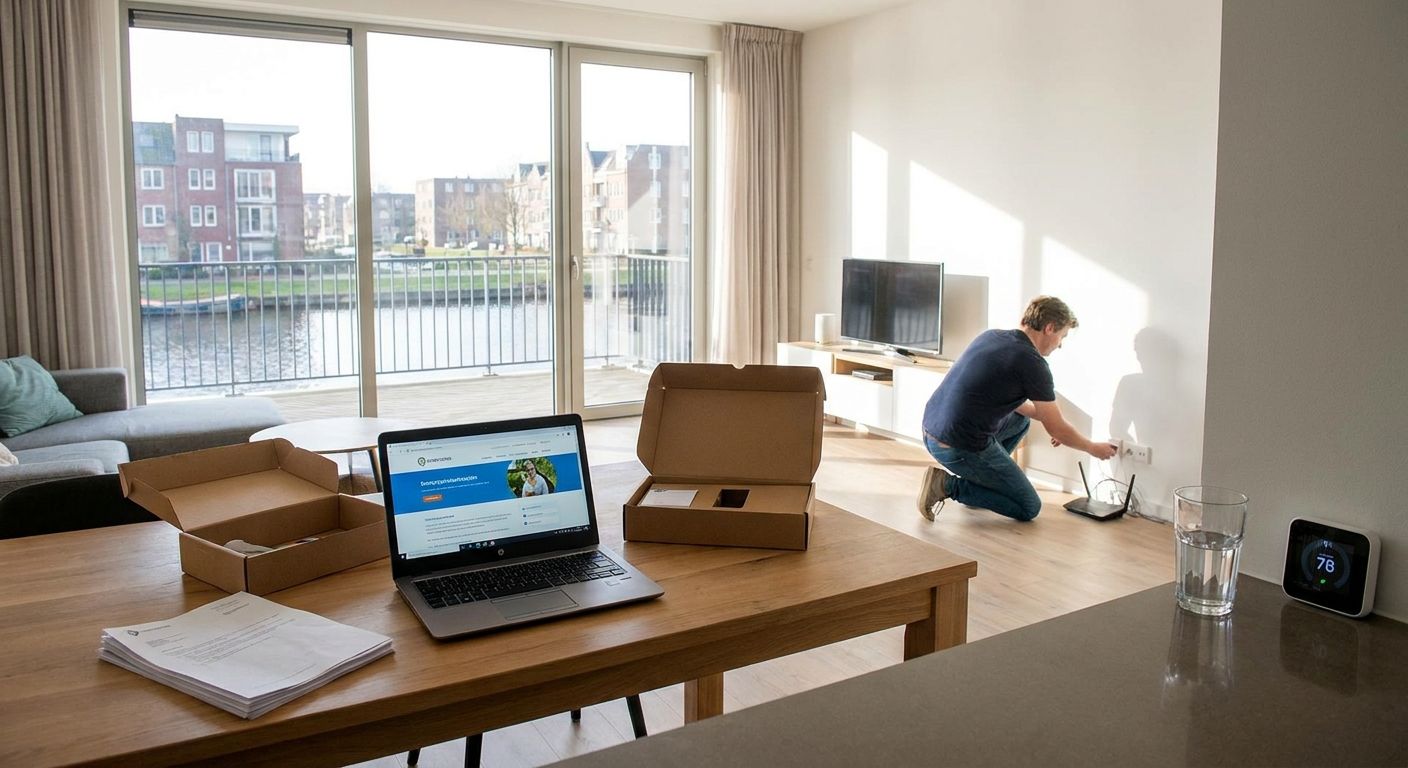
Setting up utilities in a Dutch rental apartment means five separate tasks — municipal registration, a bank account, an energy contract, a water connection, and internet — and none of them are bundled the way a US or UK lease might handle them. Miss the BSN and municipal registration step and you can't open a bank account or sign an energy contract at all, so the order you do these in matters more than the individual steps themselves.
- Register with the gemeente within 5 days of moving in before you can set up utilities in a Dutch rental apartment.
- Electricity and gas come from providers you choose yourself; water comes from one regional supplier with no choice.
- Dutch law gives you a 14-day cooling-off period on any new energy or internet contract signed in 2026.
- A BSN and Dutch IBAN are required before most energy providers will activate a direct debit contract.
- Relocify's utilities setup service handles the paperwork for tenants who don't want to manage six separate sign-ups.
Why this matters
Dutch rental listings rarely include utilities in the rent — even fully furnished apartments usually list gas, electricity, water, and internet as the tenant's responsibility. Landlords in the Netherlands are legally required to disclose whether service costs (servicekosten) cover things like building maintenance or shared heating, but personal utility contracts sit outside that.
Getting this wrong costs time, not just money: an energy provider can't activate a contract without a BSN and often not without a Dutch IBAN, and a water company won't even ask which provider you want because there isn't one. If you're still working through the basics of renting an apartment in the Netherlands as an expat, utilities setup is the step that trips up most first-time tenants in 2026 because nobody tells them the order matters.
How do you set up utilities in a new Dutch rental apartment?
Follow this order — skipping ahead usually means a rejected application somewhere down the line.
| Step | Task | Depends on |
|---|---|---|
| 1 | Register at the gemeente (BRP registration) | Signed lease, move-in date |
| 2 | Apply for a BSN if you don't have one yet | Gemeente registration |
| 3 | Open a Dutch bank account | BSN, residence address |
| 4 | Sign an electricity and gas contract | BSN, IBAN |
| 5 | Confirm your water supplier | Address only — automatic |
| 6 | Book internet and TV installation | Address, sometimes ID only |
Most of these run in parallel once step 3 is done. The gemeente registration is the bottleneck: it has to happen first, and by Dutch law you must register within 5 days of moving into an address where you'll stay longer than four months.
Electricity and gas: liberalized market, 14-day cooling-off period
The Netherlands has a fully liberalized energy market — you choose your own supplier for both electricity and gas, unlike water. Providers like Vattenfall, Essent, Eneco, and Vandebron compete on contract terms and green-energy sourcing rather than on the grid itself, since the physical network is run by regional grid operators regardless of which company bills you.
Every new energy contract signed as a consumer in the Netherlands carries a 14-day cooling-off period under EU consumer protection rules, so you can cancel within two weeks of signing without penalty if you find better terms elsewhere. Sign-up typically requires your BSN, IBAN, and the property's EAN codes (unique meter identifiers usually listed in the rental contract or available from the landlord).
Best for: tenants who want to compare and switch — this is the one utility where shopping around actually changes your contract.
Water: one regional supplier, no switching required
Water in the Netherlands is delivered by regional monopolies — Vitens, Waternet, Dunea, Evides, WMD, Brabant Water, and Oasen each cover a specific area, and you don't get to pick between them. Your address determines your supplier automatically.
Most tenants simply register online with the regional company assigned to their postcode once they've moved in — there's no comparison shopping and no cooling-off period to worry about because there's nothing to switch away from.
Best for: nobody has to decide anything here — it's the one utility on this list that runs itself.
Internet and TV: compare providers before you sign
Unlike water, internet is a genuine choice — KPN, Ziggo, T-Mobile, and several regional fiber providers all compete for the same address, though not every provider serves every building. Fiber availability varies block by block in Dutch cities, so it's worth checking coverage at the exact address before signing rather than assuming your last apartment's provider covers the new one.
The same 14-day cooling-off period that applies to energy contracts applies to most consumer internet contracts too, which gives you room to switch if installation gets delayed or service doesn't meet expectations.
Best for: remote workers and anyone relocating for a new job who needs connectivity locked in before the first day — check the relocating to the Netherlands for a new job guide if internet setup is one piece of a larger move.
Municipal registration and waste tax: 5 days to register at the gemeente
BRP registration (Basisregistratie Personen) is the task that unlocks everything else. You have 5 days from your move-in date to register at your local gemeente if you'll be staying longer than four months, and this registration is also what generates your BSN if you don't already have one.
Once registered, most municipalities automatically enroll your address for waste collection tax (afvalstoffenheffing) and water system tax — these arrive as separate municipal bills rather than something you sign up for directly. If you haven't sorted the BSN piece yet, the getting a BSN before renting an apartment guide walks through the appointment process step by step.
Best for: every tenant — this step is not optional and gates the rest of the checklist.
Why utilities setup varies by tenant
Not every rental follows the same path — a few factors change how much of this you'll actually handle yourself:
- Furnished vs. unfurnished — furnished short-stay rentals sometimes bundle utilities into service costs, unfurnished long-term leases almost never do
- Region — your water supplier and grid operator depend entirely on postcode, not choice
- BSN timing — non-EU tenants without a prior BSN face an extra appointment step before energy providers will activate a contract
- Building type — apartments on district heating (stadswarmte) skip a gas contract entirely and only need electricity
- Landlord agreements — some agencies pre-arrange internet or energy as part of the lease, which shortens the checklist
- Move-in season — energy and internet providers see longer appointment backlogs during peak relocation months
Do you need a Dutch bank account to set up utilities?
Yes — most energy and internet providers in the Netherlands require a Dutch IBAN for direct debit before they'll activate a contract in 2026. A foreign account rarely works for recurring utility billing, even when the provider accepts international customers for other services.
Opening the account itself typically requires a BSN and proof of address, which is why the registration order matters — see opening a Dutch bank account before signing a lease for the documents banks ask for.
Can you set up utilities before you have a BSN?
No — a BSN is required by nearly every Dutch energy provider before they'll activate an electricity or gas contract, since it's tied to the billing and tax system. Water suppliers are sometimes more flexible on timing, but electricity, gas, and most bank accounts all wait on the BSN first.
How long does it take to get utilities running in a new apartment?
Registration at the gemeente must happen within 5 days of moving in, and energy or internet contracts carry a 14-day cooling-off period after signing — so the full sequence from move-in to a fully active household typically spans several weeks rather than a single afternoon. Tenants who arrive with a BSN and Dutch bank account already sorted move through the remaining steps far faster.
Tenants who'd rather not manage six separate sign-ups themselves can hand the whole checklist to Relocify's utilities setup service for new tenants, which is built specifically for internationals moving into a Dutch rental for the first time.
Skip the utilities paperwork
Have a specialist handle registration, energy, and internet setup for you.
FAQ
What's the best order to set up utilities in a Dutch rental apartment?
Register at the gemeente first, since that generates your BSN within 5 days of move-in, then open a Dutch bank account, then sign electricity, gas, and internet contracts — water connects automatically without any sign-up.
Is electricity included in Dutch rent?
No, electricity is almost never included in Dutch rent — tenants sign their own contract with a provider like Vattenfall, Essent, or Eneco after moving in, separate from any service costs the landlord charges.
How much notice do you get to cancel a Dutch energy contract?
You get a 14-day cooling-off period on any new consumer energy contract signed in the Netherlands, under EU consumer protection rules, letting you cancel without penalty if you find better terms.
Do you choose your own water company in the Netherlands?
No, water suppliers in the Netherlands are regional monopolies — Vitens, Waternet, Dunea, Evides, and others each cover a fixed area, so your address determines your supplier automatically.
Can you set up Dutch utilities without a BSN?
No, most electricity, gas, and bank account applications require a BSN before activation, which is why gemeente registration within 5 days of move-in comes first in the checklist.
Do internet providers serve every address in the Netherlands?
Not always — fiber coverage from KPN, Ziggo, and regional providers varies block by block, so checking availability at the exact address before signing avoids installation delays.
Does Relocify help with utilities setup?
Yes, Relocify's utilities setup service handles gemeente registration, energy, water, and internet sign-ups for tenants who'd rather not manage six separate applications themselves.
What happens if you miss the 5-day gemeente registration deadline?
Missing the 5-day BRP registration window can delay your BSN issuance, which in turn blocks bank account and energy provider applications — so it's worth booking the gemeente appointment before move-in day if slots are available.
One last thing
The detail most tenants miss in 2026 isn't the energy contract — it's that district-heating buildings (stadswarmte) skip the gas step entirely, so if your apartment has that setup, you only need one energy contract instead of two. Check the property listing or ask the landlord before assuming you need both.