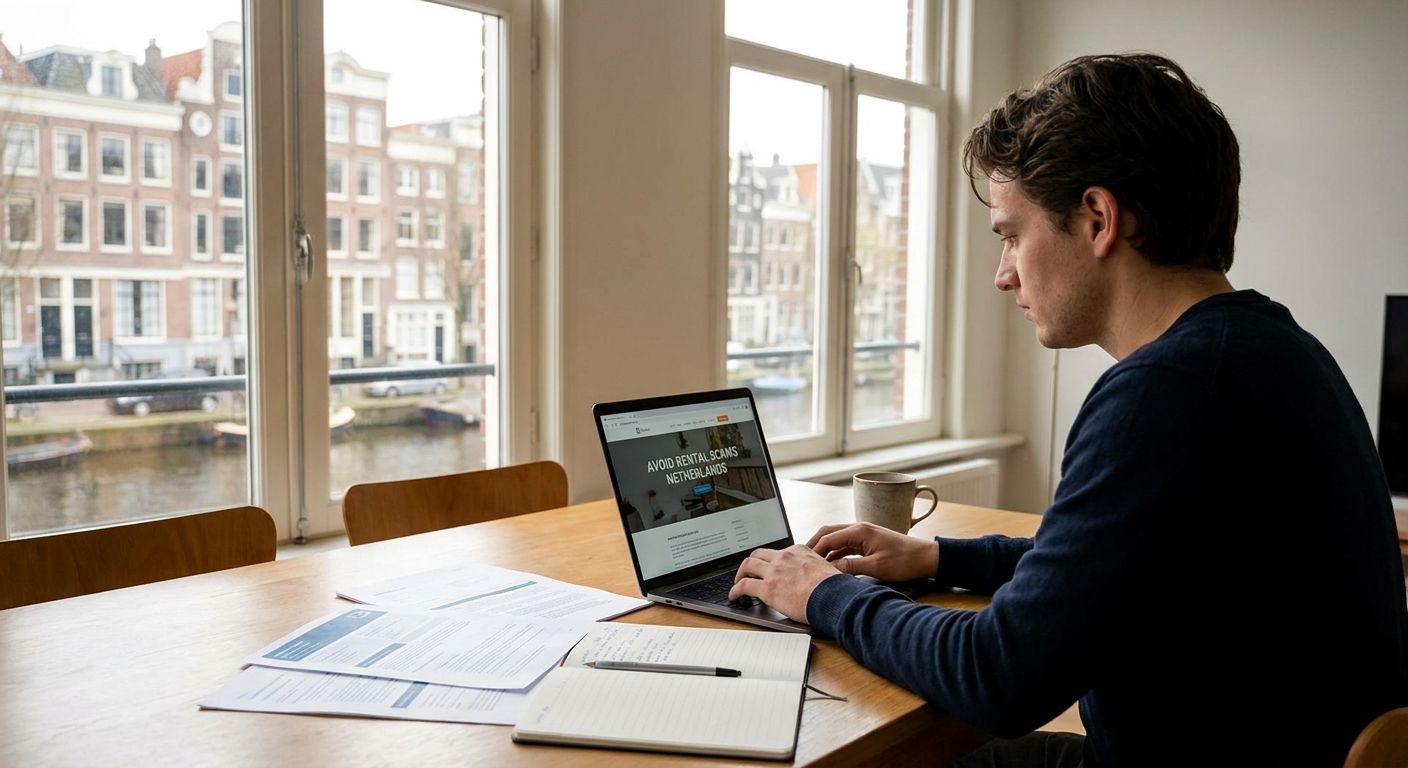
Rental scams targeting internationals in the Netherlands follow a small number of repeatable patterns, and each one has a specific, checkable fix you can run before you send anyone a euro.
- Never wire a deposit before signing a contract or confirming the landlord owns the property — the top scam pattern in 2026.
- Check the landlord or agency against Kadaster and KvK before any payment; unregistered agents are a hard Skip.
- An agent hired by the landlord can't legally bill you a placement fee too — a bemiddelingskosten request on top of rent is a red flag, not a maybe.
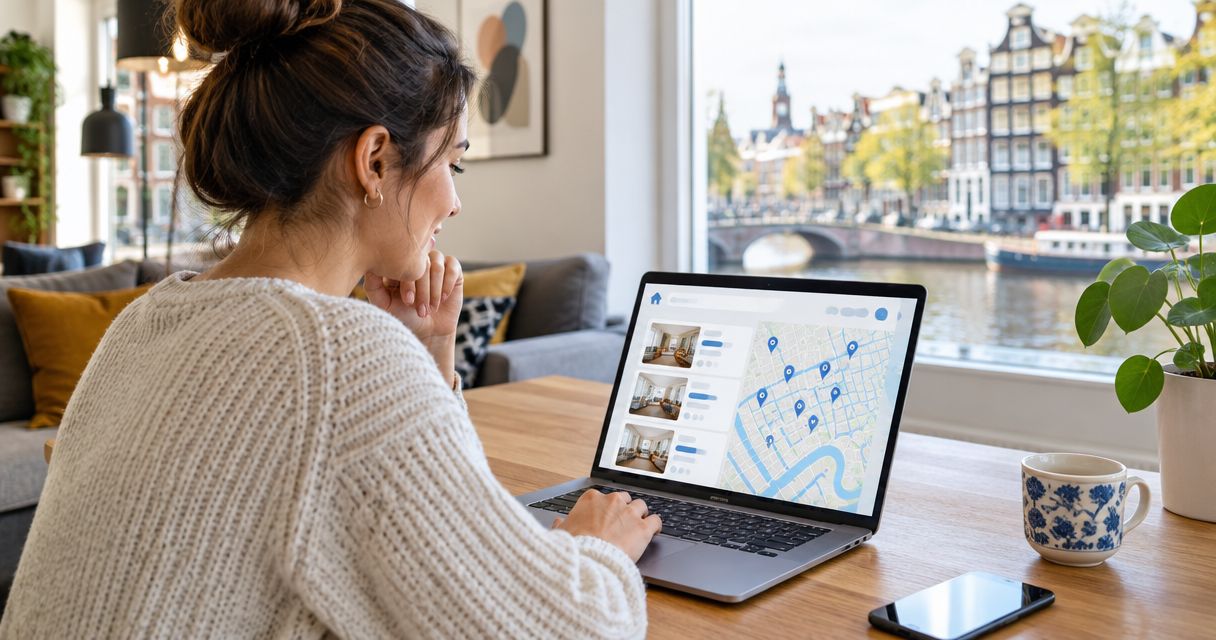
- Insist on a live video tour instead of trusting photos alone; stolen-photo listings are the most common trap for internationals searching remotely.
- Relocify's virtual viewings and document checks catch most of these patterns before you're asked for money.
Why this matters
The Dutch rental market runs on scarcity. Listings in Amsterdam, Utrecht, and The Hague disappear within hours, and that urgency is exactly what scammers count on to rush you past normal checks.
Internationals are targeted more than local renters for a simple reason: many are searching from abroad, can't view a property in person, and don't know Dutch tenancy law well enough to spot a violation when they see one. If you're working through the full process of renting an apartment in the Netherlands as an expat, scam-checking has to happen before the paperwork stage, not after.
The good news: 2026 scam patterns are consistent enough that a fixed checklist catches almost all of them.
What you'll need
- A copy of your passport or ID — never send the original file to an unverified contact
- Access to the Kadaster (Dutch land registry) to check property ownership
- The KvK register to confirm an agency is a real, registered business
- A bank account with a verifiable IBAN for any legitimate transfer
- 20-30 minutes per listing to run the checks below before you reply
- A video-calling app for remote viewings
The steps
1. Cross-check the listing on more than one platform
Copy the address or a distinctive phrase from the listing description and search it. If the same photos show up under a different landlord name, a different price, or on a site not affiliated with the original poster, you're looking at a stolen listing. This single check kills the majority of scam attempts before you invest more time.
Common mistake: assuming a listing is legitimate because it appeared on a well-known site. Scammers repost real listings from Funda or Pararius under fake contact details within hours of the original going live.
2. Verify the landlord's identity and ownership
Run the address through the Kadaster to confirm who actually owns the property. If the name on file doesn't match the person you're messaging, ask why — a legitimate property manager will have a management agreement they can reference, not a vague excuse.
Expected outcome: either a clean match, or a story that doesn't hold up under one follow-up question.
3. Confirm agency registration and fee legality
Every real Dutch rental agency has a KvK number. Look it up. If an agent hired by the landlord also tries to bill you bemiddelingskosten (placement fees), stop — Dutch courts have repeatedly ruled that an agent can't be paid twice on the same deal. A legitimate agent will explain their fee structure without pressure.
Common mistake: paying an "administration fee" to unlock a viewing. No legitimate Dutch agency charges to see a property.
4. Insist on a live video tour, not just photos
Photos alone are the easiest thing to fake or steal. A live video call, where you can ask the person to walk to the window or show the building entrance, is much harder to fabricate. This is also how remote apartment hunting works at scale: you can view a Dutch rental apartment remotely without ever being in the country, as long as the tour is live or independently verifiable.
Expected outcome: a landlord or agent willing to show the unit on camera within a reasonable window, usually a day or two.
5. Never pay before you have a signed, written contract
This is the single rule that stops the most damage. No deposit, no first month's rent, no "holding fee" changes hands until both parties have signed a written agreement. Anyone asking for money before a contract exists is not renting to you — they're extracting a payment from a queue of people who never see the apartment.
Common mistake: sending money because "three other people are interested" and you're afraid of losing the unit. That pressure line is a scam signal, not a reason to skip the contract.
6. Read the contract against Dutch tenancy rules
The Wet Goed Verhuurderschap (Good Landlord Act), in force since July 1, 2023, requires landlords to register with the municipality, cap the deposit at two months' rent, and provide a written contract in a language you understand. If the contract you're handed violates any of these, that's grounds to walk away, not to negotiate around.
Expected outcome: a contract that names the deposit amount, the rent, the start date, and both parties' identifying details in writing.
7. Use traceable payment methods only
Bank transfer with a documented IBAN that matches the name on the Kadaster or KvK record. No wire transfers to personal accounts abroad, no crypto, no gift cards. If the payment instructions feel unusual for a routine rental transaction, they are.
8. Get the inspection report at move-in
Dutch law expects an opnamerapport (inspection report) documenting the condition of the property when you move in. This protects your deposit later and confirms, on paper, that the unit you're standing in matches what you agreed to rent. Skipping this step is how legitimate deposits get disputed months later.
Let Relocify vet listings for you
Verified listings, remote viewings, and contract checks in one place.
Troubleshooting
- The "landlord" is always traveling and won't do a video call. Treat this as an automatic Skip — a real landlord or their agent can find 15 minutes for a video walkthrough.
- The price is well below comparable units in the same postcode. Cross-check against at least two other platforms; if nothing matches, the listing is bait.
- You're asked for bemiddelingskosten as the tenant while the landlord hired the agent. Refuse and ask for the agent's mandate in writing.
- Payment is requested via wire transfer, crypto, or gift cards to a personal account before any contract exists. Hard stop, no exceptions.
- The listing photos match another property under a different name or price. Reverse image search confirms a stolen listing; report and move on.
- No written contract is offered, or it's not in a language you can read. The Good Landlord Act requires clarity — refuse to sign until you get one.
Tools and resources
- Kadaster — ownership verification for any address
- KvK register — confirms an agency is a real, registered business
- A reverse image search tool — catches stolen listing photos in seconds
- Rental platforms built for internationals typically bundle verification into the listing itself; see how these platforms compare before you start browsing individual sites
- Fraudehelpdesk.nl — the Dutch national fraud reporting line, useful once you've confirmed a listing is fake
What to do next
Once you've cleared a listing, the next risk point is the lease terms themselves — deposit size, notice period, and whether the rent is fair for the area. Walk through how to negotiate a lease as a foreigner in the Netherlands before you sign anything, even a contract that's passed every scam check above.
FAQ
What's the most common rental scam in the Netherlands in 2026?
Stolen listings with real photos reposted under a fake landlord name are the most common pattern in 2026. The scammer asks for a deposit or holding fee before any viewing takes place, then disappears once payment is sent.
Is it normal to pay a deposit before viewing an apartment in the Netherlands?
No. A legitimate landlord or agency never asks for money before you've seen the unit, live or on video, and signed a written contract. Any request for payment before that point is a red flag.
How much can a landlord legally ask for as a deposit in the Netherlands?
Under the Wet Goed Verhuurderschap, in force since July 1, 2023, the deposit is capped at two months' rent. A demand for more than that is a legal violation, not just unusual practice.
Can a rental agent charge me a fee if the landlord hired them?
No. Dutch courts have repeatedly ruled that an agent paid by the landlord can't also bill the tenant a placement fee. If this happens, ask for the agent's mandate in writing before paying anything.
How do I verify a landlord actually owns the property in the Netherlands?
Check the address against the Kadaster, the Dutch land registry, which lists the registered owner. If the name doesn't match who you're messaging, ask for a management agreement before proceeding.
Is it safe to rent an apartment in the Netherlands remotely, without visiting?
Yes, as long as the viewing is live or independently verifiable rather than photos alone. A live video tour lets you confirm the building, the unit, and the person showing it in real time.
What should I do if I think I've found a fake rental listing?
Stop responding, don't send any payment or documents, and report the listing to Fraudehelpdesk.nl, the Dutch national fraud reporting service. Reporting it also protects the next renter who finds the same listing.
Do I need a written contract to rent legally in the Netherlands?
Yes. The Good Landlord Act requires a written contract in a language the tenant understands, covering rent, deposit, and identifying details for both parties. A verbal agreement or a contract you can't read isn't compliant.
One last thing
The checks in this guide take under half an hour per listing, but most renters skip them under time pressure — which is precisely the pressure scammers manufacture. If a deal in 2026 feels rushed enough that you're tempted to skip the Kadaster check, that feeling is the signal, not an inconvenience to work around.