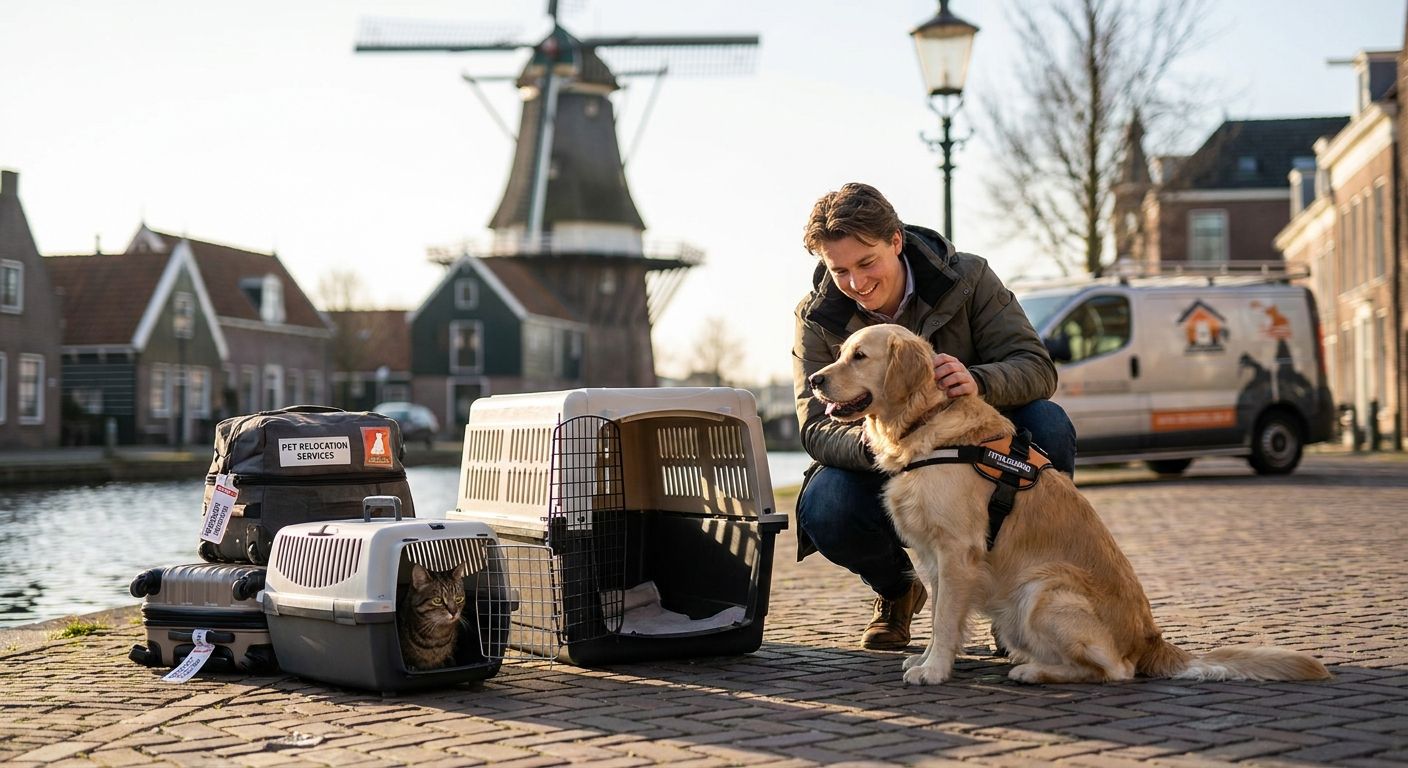
Pet relocation to the Netherlands is the process of moving a dog, cat, or other companion animal into the country while meeting EU entry rules, then finding it a legal home once it lands. Expats and international employees have a narrower window than tourists: leases, job start dates, and sometimes a pet's vaccination clock are all racing against each other, and a Dutch landlord's pet policy can undo weeks of careful flight planning.
This guide walks through the entry paperwork, the transport options, and the housing step most guides skip.
- Pet relocation Netherlands rules require rabies vaccination at least 21 days before entry for most pets.
- Pets from non-EU-listed countries need a rabies titer blood test and a 3-month wait, not just a shot.
- An EU animal health certificate is only valid for 10 days before travel, so timing the vet visit matters more than the flight.
- Housing is the real bottleneck: most Dutch rental listings don't allow pets, so confirm pet-friendly housing before booking transport.
Why pet relocation matters for expats moving to the Netherlands
Expats moving on a job offer or transfer usually have a fixed start date, which means the pet's paperwork timeline has to be reverse-engineered from a flight that's already booked. Miss the 21-day rabies window and the pet can't legally enter on schedule, full stop.
The Netherlands follows the EU Pet Travel Regulation (EC) 576/2013, which every EU member state applies the same way: microchip first, rabies vaccine second, paperwork third, in that order. Get the sequence wrong and the vaccine doesn't count toward the waiting period.
The part most relocation guides skip: Dutch landlords set their own pet policies, and a majority of listings on the open rental market say no pets, regardless of what the EU paperwork allows. Sorting transport without confirming housing is how people end up boarding a dog for weeks after arrival.
Confirm your pet's entry requirements first
Start with the legal minimum before booking anything. The requirements differ depending on whether the pet is coming from inside the EU or from a non-EU country.
- ISO 11784/11785-compliant microchip implanted before the rabies vaccination, not after
- Rabies vaccination given at least 21 days before entry into the Netherlands
- Pets from non-EU-listed countries need a rabies antibody titer test at an approved lab, plus a 3-month wait after the blood draw
- An EU animal health certificate issued by an accredited vet, valid for 10 days from issue to entry
- Dogs need a tapeworm (Echinococcus) treatment if arriving from certain countries, timed 24-120 hours before entry
- Puppies under 12 weeks without a rabies vaccine face extra restrictions and may not qualify for standard entry
Book vet appointments on a fixed timeline
Work backward from the flight date, not forward from today. A vet visit booked too late is the single most common reason pet relocation Netherlands plans fall apart in the final two weeks.
- Schedule the microchip and rabies vaccine as one combined appointment if the pet isn't already chipped
- Set a calendar reminder for day 21 post-vaccination before locking in flights
- For non-EU origin countries, book the titer test lab appointment 4+ months before the intended move date
- Get the health certificate signed within the 10-day window before departure, not earlier
- Ask the vet clinic directly whether they're accredited to issue EU export certificates
Choose the right transport method
How the pet travels depends on size, breed, and how much hands-on support you want during the move.
- In-cabin: small pets under the airline's weight and carrier-size limit, usually the cheapest option
- Checked cargo hold: mid-size and large pets, subject to summer heat embargoes on many routes
- Dedicated pet cargo/freight: larger dogs, multiple pets, or breeds airlines restrict from standard cargo (brachycephalic breeds like bulldogs and pugs)
- IPATA-certified pet relocation company: full door-to-door handling including customs clearance
- Ground transport: viable only if the pet is already in the EU with valid EU paperwork
Handle the customs and import paperwork
The Netherlands processes pet imports through the same EU framework as any other member state, but the paperwork has to arrive with the pet, not after it.
- Original EU animal health certificate or EU pet passport (EU-issued pets only)
- Proof of the rabies vaccination date and, for non-EU pets, the titer test result
- Microchip number matching the one recorded in all vaccination and certificate documents
- Airline-specific import declaration if flying cargo rather than in-cabin
- A copy of the tapeworm treatment record if arriving from a country where it's required
Prepare the pet for the actual journey
Paperwork gets the pet legally into the country; preparation gets it there in good shape.
- Crate-train weeks in advance so the carrier isn't a first-time experience on travel day
- Avoid sedation unless a vet specifically prescribes it for that pet and that flight
- Pack a familiar blanket or toy with the pet's scent, not a brand-new item
- Withhold a full meal for a few hours before departure to reduce travel sickness
- Attach ID tags with a Dutch or international contact number, not just the home-country number
Find pet-friendly housing before you land
This is the step that derails otherwise well-planned pet relocation Netherlands moves. A pet can clear customs cleanly and still have nowhere legal to live if the lease doesn't allow it.
- Filter listings specifically for pet-friendly apartments before signing anything
- Ask the landlord in writing for pet approval, since verbal yes doesn't hold up in a dispute
- Budget for a slightly higher deposit on some pet-friendly units
- Check building-specific rules separately from the landlord's rules if the unit is in a complex
- Confirm the unit size and any outdoor access match the pet's needs before committing
Pet-friendly apartments in Amsterdam are a smaller slice of the market than most new arrivals expect, and demand from other relocating pet owners means they move fast. Confirming pet approval before the flight is booked, not after, avoids a scramble on arrival.
Register your pet in the Netherlands after arrival
Entry paperwork gets checked at the border; local registration happens after that, usually within days of settling in.
- Register the pet's microchip in a Dutch national database if it isn't already linked to one recognized in the EU
- Register for municipal dog tax (hondenbelasting) if the city you're living in charges it
- Find a local vet and transfer any ongoing medication or health records
- Ask the municipality about leash and off-leash area rules specific to that city
Find pet-friendly housing in Amsterdam
Filter listings that actually allow pets before you commit to a move date.
Pet relocation options compared
| Option | Best for | Price | Key limitation |
|---|---|---|---|
| DIY airline booking | Small, healthy pets, confident owners | Airline fees only, quote-based | No door-to-door support; owner handles all customs paperwork |
| IPATA-certified pet relocation company | Multiple pets, seniors, or non-EU origin | Quote-based | Booking lead time often 6-8 weeks |
| Ground transport from an EU country | Pets already in the EU with valid papers | Quote-based | Not viable for intercontinental moves |
| Pet escort/nanny service | Owners who can't fly with the pet | Quote-based | Fewer providers; route availability varies |
Verdict: for a healthy small pet moving from inside the EU, DIY airline booking with a confirmed pet-friendly lease wins on cost; for a non-EU move or a large breed, an IPATA-certified pet relocation company is worth the fee to avoid a rejected entry.
Common mistakes expats make with pet relocation
- Booking flights before checking the airline's live pet embargo dates, which shift with summer heat restrictions
- Starting the rabies titer test too late, then discovering the 3-month wait starts from the blood draw, not the vaccination date
- Signing a Dutch lease before getting written pet approval from the landlord
- Assuming an EU pet passport applies to a pet flying in from outside the EU — it doesn't; that pet needs a separate EU animal health certificate
- Forgetting municipal dog tax registration until a fine notice arrives
FAQ
What's the best way to bring a dog to the Netherlands?
For a healthy dog already inside the EU, a direct flight with in-cabin or standard cargo booking works once the rabies vaccination has cleared its 21-day wait. For a dog coming from outside the EU, an IPATA-certified pet relocation company handles the titer test timeline and customs paperwork with less risk of a rejected entry.
How much does pet relocation to the Netherlands cost?
Cost depends on pet size, origin country, and whether you book the flight yourself or use a full-service pet shipper. Airline pet fees, vet certificate costs, and any full-service relocation company quote should all be confirmed directly, since none of these are fixed nationwide prices.
Do pets need to quarantine in the Netherlands?
No, pets that meet the EU entry requirements — microchip, rabies vaccination at least 21 days before arrival, and a valid health certificate — don't face mandatory quarantine. Pets from non-EU-listed countries need the additional rabies titer test and 3-month wait instead of quarantine.
How long before travel does my pet need the rabies vaccine?
At least 21 days before entry into the Netherlands, and the vaccine only counts if it was given after the microchip was implanted. Vaccinating before chipping resets the clock.
Can I bring my cat in the cabin on a flight to Amsterdam?
Most airlines allow small cats in-cabin if the carrier fits under the seat and meets weight limits, but policies vary by airline and route. Confirm directly with the airline before booking, since limits on the number of pets per flight can fill up fast.
What is the EU pet passport and do I need one?
An EU pet passport is issued by an accredited vet inside the EU and documents a pet's microchip, vaccinations, and rabies status for travel between EU countries. Pets arriving from outside the EU need an EU animal health certificate instead, which is a separate document with a shorter validity window.
Is it hard to find pet-friendly housing in the Netherlands?
Yes, pet-friendly listings make up a smaller share of the Dutch rental market than in many other countries, and landlord approval is often required in writing. Confirming pet policy before signing a lease avoids the common situation of clearing customs with a pet that has nowhere legal to live.
One last thing
The flight is rarely the hard part of pet relocation Netherlands moves — the housing is. Owners who spend weeks perfecting the rabies titer timeline often skip the five-minute step of confirming, in writing, that the landlord allows pets, and end up boarding the animal after a flawless legal entry. Sort the lease first.