Cultural and language orientation for expats in the Netherlands is the structured process of learning Dutch communication norms, everyday phrases, and bureaucratic etiquette before or right after you land, with the aim of cutting a year-long adjustment period down to a few months. Expats moving for a job or a partner face a different version of this than tourists or students: you need enough Dutch to deal with a landlord, a gemeente clerk, or a bank on short notice, not just enough to order coffee.
- Cultural language orientation expats netherlands programs work best when started 4-8 weeks before arrival, not after.
- Dutch directness reads as blunt to newcomers in 2026 but is a communication style, not rudeness.
- Area orientation matters as much as language: the wrong neighborhood undoes months of language prep.
- Employer-sponsored destination services cover logistics; they rarely replace basic survival Dutch.
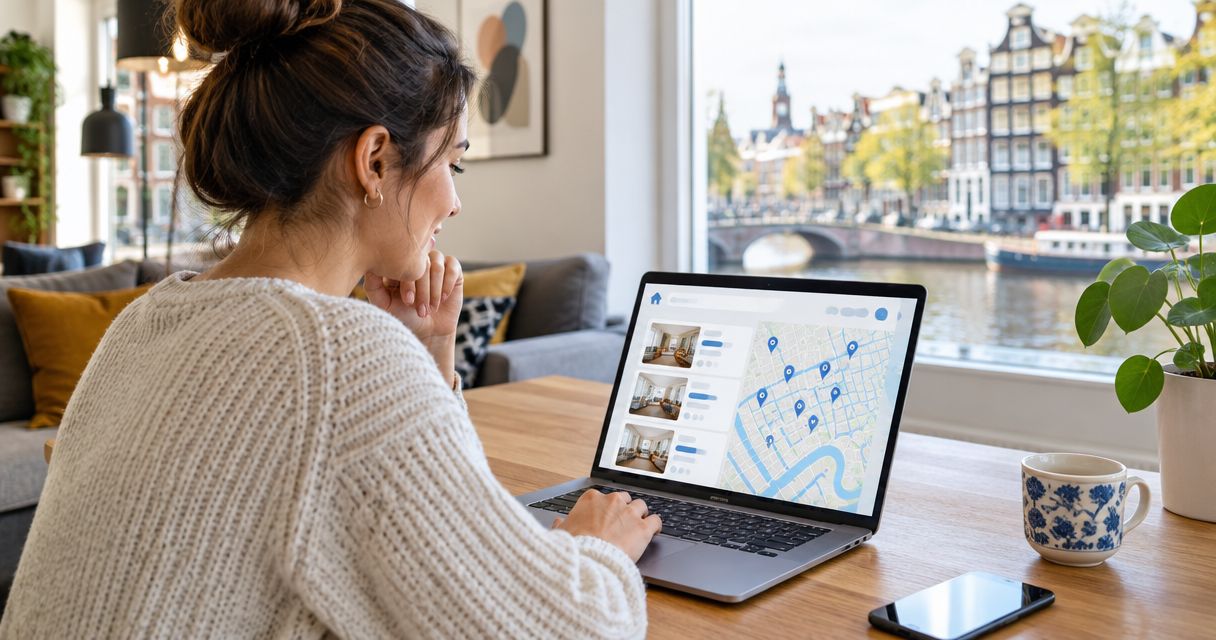
- Relocify pairs remote apartment viewings with orientation content so housing and culture prep happen in parallel.
Why cultural and language orientation matters for expats
The Netherlands ranks consistently among the highest English-proficiency countries in Europe, and that fact causes more relocation friction than it solves. Employers assume English covers daily life; it covers the office, not the gemeente appointment, the landlord's WhatsApp message in Dutch, or the school newsletter. Expats who skip orientation in 2026 report the same friction points as expats did five years ago: directness mistaken for hostility, and bureaucracy mistaken for indifference.
Housing search compounds this. An expat viewing area orientation programs before signing a lease avoids picking a neighborhood on price alone and regretting it once the cultural mismatch shows up in daily life. Orientation and housing decisions are not separate tasks; they are the same decision made twice.
Learn survival Dutch before you land
You do not need fluency to function in your first 90 days. You need a working set of phrases for the situations that actually block progress: renting, banking, and municipal registration.
- Memorize 20-30 phrases tied to housing and bureaucracy, not tourism ("Ik wil een afspraak maken" beats "Waar is het station").
- Use a spaced-repetition app daily for 15 minutes starting at least 4 weeks before your move date.
- Record how numbers and addresses are said aloud in Dutch; phone calls move fast and expats stall on digits.
- Practice reading formal Dutch letters (gemeente, belastingdienst) since translation apps handle these poorly.
- Set your phone's autocorrect to Dutch for two weeks before arrival to force passive exposure.
Study Dutch directness and workplace norms
Dutch communication culture rewards saying the actual answer instead of a softened one. Meetings that feel confrontational to a newcomer are, in most cases, just efficient.
- Expect feedback delivered as a flat statement, not wrapped in compliments.
- Treat disagreement in a meeting as normal, not as a sign the relationship is damaged.
- Ask directly for what you need instead of hinting; hinting gets missed, not politely deferred.
- Watch how colleagues handle deadlines: a stated "no" is common and not negotiable through persistence.
- Separate personal warmth from professional bluntness; Dutch colleagues can be both direct and genuinely friendly.
Choose your neighborhood with cultural fit in mind, not just commute time
A rental in the right building on the wrong street changes how fast you adjust. Expats who research how to choose an area to live in as an expat in the Netherlands before signing tend to report faster social integration than those who choose purely on square meters and price per month.
- Walk or virtually tour the neighborhood at different times of day before committing.
- Check for an existing expat or international community if you want a softer landing in year one.
- Confirm proximity to a supermarket, a GP practice, and a language school, not just to the office.
- Ask current tenants (via the listing agent or a virtual tour host) about noise, neighbors, and daily rhythm.
- Weigh commute time against the emotional cost of isolation in an unfamiliar suburb.
Set up a support network before you need one
Waiting for a crisis to build a network is the most common orientation mistake. Build contacts before the first bureaucratic snag, not during it.
- Join one local Facebook or Meetup group tied to your city, not just a national expat group.
- Identify a Dutch-speaking contact (colleague, neighbor, or agent) willing to make one phone call on your behalf if needed.
- Register with a gemeente-run integration or newcomer program if your municipality offers one.
- Attend at least one in-person cultural event (market, festival, sports club) in your first month.
- Keep a shortlist of English-speaking service providers (dentist, GP, accountant) for the first year.
Practice everyday social scripts
Small talk, cycling etiquette, and coffee culture carry more social weight in the Netherlands than most relocation guides admit. Getting these wrong is minor; getting them right speeds up how quickly you stop feeling like a visitor.
- Learn basic cycling rules: hand signals, right-of-way at roundabouts, and where bikes park versus lock.
- Practice the Dutch handshake-and-name introduction; it's used more consistently than in many other cultures.
- Understand "gezellig" as a social value, not just a word, and notice how it shapes invitations and hosting.
- Bring a small gift (flowers, pastry) to a first home visit; it's expected, not optional.
- Learn the difference between borrel culture (after-work drinks) and formal networking; they use different registers of Dutch and English.
Use structured resources instead of ad hoc learning
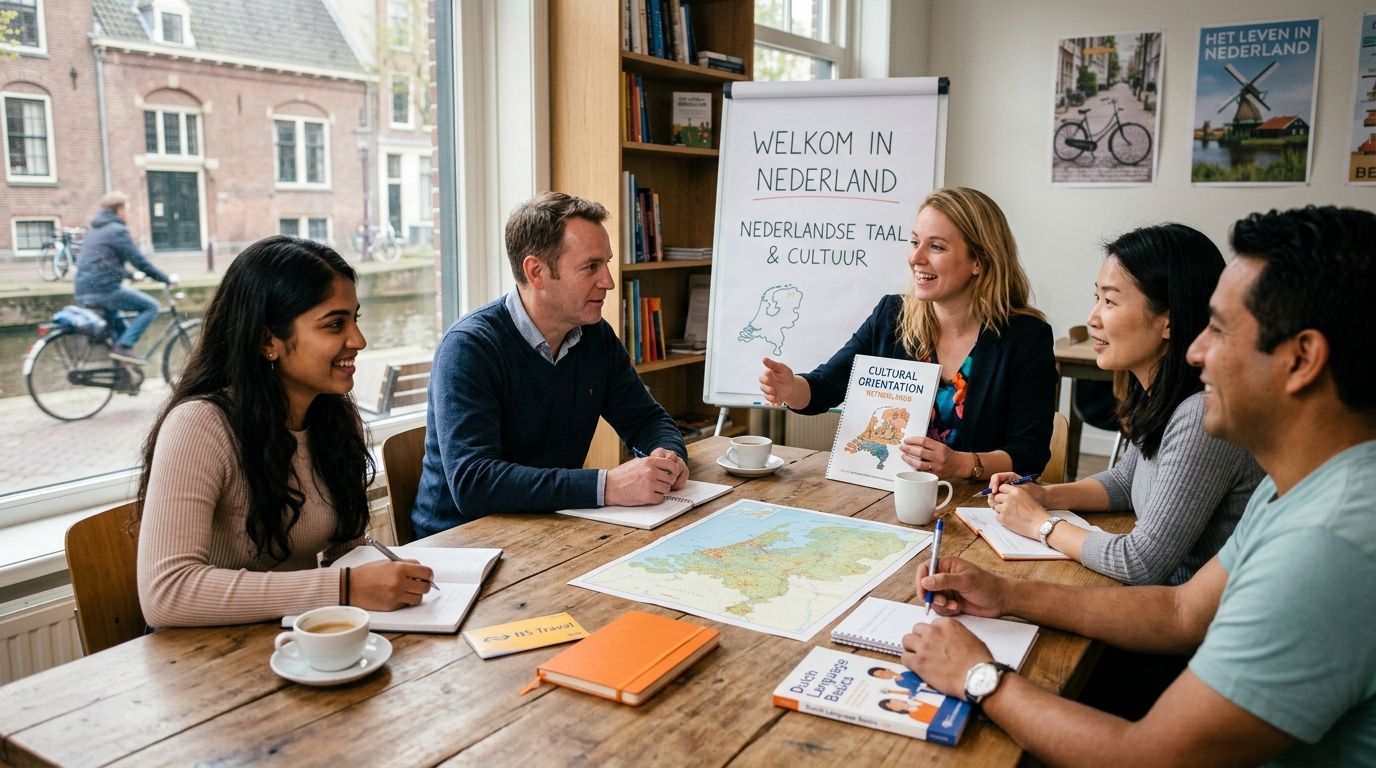
Self-teaching works for vocabulary; it rarely covers cultural nuance. Pairing a course with a destination or orientation service closes that gap faster than either alone.
- Enroll in a taalschool group course if your schedule allows a weekly commitment.
- Book a private tutor for the first month if your job or move-in deadline is tight.
- Use employer-sponsored destination services if your relocation package includes them; they combine housing, schools, and orientation logistics in one track.
- Ask your relocation provider whether cultural orientation is bundled with home-finding support, since running both separately duplicates effort.
- Set a 90-day language and orientation milestone, not an open-ended goal with no checkpoint.
Comparing orientation and language options
| Option | Best for | Key limitation |
|---|---|---|
| Self-study apps | Expats testing commitment before enrolling in a course | Skips workplace and bureaucratic Dutch entirely |
| Group taalschool course | Expats wanting structure plus a peer group | Weekly sessions compete with house-hunting and job onboarding |
| One-on-one tutor | Expats on a tight relocation timeline | Costs more per hour than group instruction |
| Area/cultural orientation program | Families relocating together who need local context fast | Teaches norms and logistics, not the language itself |
| Employer-sponsored destination service | Corporate assignees with a relocation package | Only available if the employer includes it |
Verdict: no single option covers both language and culture — pair a structured course with an orientation program rather than expecting one to do both jobs.
“Dutch directness reads as rude to newcomers until they realize it's efficiency, not hostility.”
Common mistakes expats make with cultural and language orientation
- Waiting until arrival to start any Dutch, then getting stuck on a gemeente or bank call that defaults to Dutch with no English option.
- Assuming high English proficiency means orientation is optional, then misreading directness as rudeness in a landlord or manager conversation.
- Picking a neighborhood on price alone and skipping area research, then feeling isolated by month three.
- Treating orientation as a one-time briefing instead of ongoing practice through the first 6-12 months in 2026.
- Leaving a relocating partner or children out of orientation entirely, so only the primary applicant adjusts.
Housing and orientation move together in practice. A tenant who searches, views, and signs a lease without traveling first still needs the same cultural groundwork as someone who flew over for viewings — the orientation clock starts the day you accept the job, not the day you land.
Start your Dutch housing search now
View apartments remotely and sign a lease before you land in 2026.
FAQ
What's the best way to learn Dutch before moving to the Netherlands in 2026?
Start with survival phrases tied to housing, banking, and municipal registration at least 4 weeks before your move date. Pair a spaced-repetition app with one structured course rather than relying on either alone.
Is cultural orientation necessary if my employer offers relocation support?
Yes, because most employer relocation packages cover logistics like housing and school search, not communication style or daily social norms. Ask specifically whether your package includes destination services before assuming culture is covered.
How long does it take to adjust to Dutch culture as an expat?
Most expats report the sharpest adjustment period in the first 3-6 months, with continued smoothing through month twelve. Expats who start language and cultural prep before arrival tend to shorten this window.
Do I need to speak Dutch to rent an apartment in the Netherlands?
No, most landlords and agents in major cities communicate in English, but basic Dutch helps when negotiating terms or reading a lease clause. English is standard for the transaction itself in 2026.
What's the biggest culture shock for expats moving to Dutch cities?
Directness in everyday conversation is the most frequently cited adjustment, followed by strict adherence to schedules and appointments. Neither reflects unfriendliness; both reflect a different communication default.
How is Dutch workplace communication different from other countries?
Feedback and disagreement are stated flatly rather than softened, and meetings prioritize efficiency over consensus-building small talk. Colleagues separate professional bluntness from personal warmth.
Should I take a group course or self-study app for Dutch language basics?
Use a self-study app to build vocabulary in the weeks before your move, then switch to a group course or tutor once you're settled. Apps alone rarely cover workplace or bureaucratic Dutch.
What's the difference between cultural orientation and destination services?
Cultural orientation teaches communication norms and social expectations, while destination services handle logistics like housing, schools, and registration appointments. The two overlap but neither fully replaces the other.
One last thing
The expats who adjust fastest in 2026 are not the ones who study the most Dutch grammar; they're the ones who pick a neighborhood that matches their social needs and start practicing directness as a skill, not a personality flaw to tolerate. Language fixes the words; area fit and communication style fix the friction underneath them.