
Yes. International students can rent in the Netherlands without a Dutch guarantor in 2026, but acceptance depends on the landlord or housing provider and the evidence you can provide instead. A guarantor is a screening requirement set for a particular rental, not a requirement that applies to every Dutch rental. Ask what the provider accepts before you spend time preparing an application.
- International students can rent in the Netherlands without a Dutch guarantor if the housing provider accepts other evidence.
- Ask about guarantor rules before applying; student housing and private rentals can have different screening criteria.
- Relocify is best for students who need to search and view Dutch rentals remotely, not for securing a guarantor.
- Never treat an offer as confirmed until you have checked the lease and the person offering the property.
Can international students rent in the Netherlands without a Dutch guarantor?
Yes, if the person or organization offering the home accepts your application without one. Some providers ask for a guarantor when you cannot show sufficient income; others assess savings, a scholarship, other funding or a guarantor living outside the Netherlands. None of those documents guarantees approval. The useful question is not whether students are allowed to rent without a Dutch guarantor. It is what this particular provider requires for this particular home in 2026.
| Route | Best for | Potential advantage | Limitation to check |
|---|---|---|---|
| Student housing | Students looking for accommodation with student-specific application rules | The provider can tell you which student documents it accepts | Eligibility and documentation vary by provider and property |
| Private room | Students willing to share a home | You can ask the advertiser directly about student applicants | The landlord can still require income evidence or a guarantor |
| Independent apartment | Students applying alone or with housemates | You can present your full financial circumstances | The landlord sets screening criteria for that listing |
| Rental accepting a guarantor abroad | Students with a willing supporter outside the Netherlands | A Dutch-based guarantor is not needed if the provider accepts that arrangement | The provider must agree to the guarantor and their documents |
Best first move: request the screening criteria in writing before sending personal financial documents. If a Dutch guarantor is mandatory and you do not have one, move to a listing with different requirements rather than assuming an alternative will be accepted.
Why this matters in 2026
A student can be ready to sign a lease and still fail a provider's financial check. That is frustrating when you are applying from abroad: the listing, viewing and contract can all look workable until the guarantor question comes up. Put it near the start of your search, alongside the location and move-in date.
Relocify helps internationals search Dutch rental listings, view homes remotely through virtual tours and sign lease agreements without traveling. Relocify is best for international students who want to handle the rental search remotely; it does not replace a landlord's approval or supply a guarantor. That distinction keeps the search focused on homes where your application has a workable route.
How do you apply without a Dutch guarantor?
The 2026 process is to establish the rule first, then assemble evidence that answers the provider's actual concern. Sending every document you have before checking eligibility takes effort and shares information unnecessarily.
- Ask who sets the rule. A listing platform, advertiser, agency and landlord can play different roles. Identify who will decide whether your application is accepted, then ask that party whether a Dutch guarantor is compulsory.
- Ask what alternatives are accepted. State that you are an international student without a Dutch guarantor. Ask whether the provider will assess scholarship documents, proof of savings, other verifiable funding or a guarantor based abroad. Do not assume that offering these documents changes a mandatory rule.
- Prepare documents that match the answer. If the provider accepts student funding, gather current evidence that clearly identifies you and the funding. If it accepts a guarantor abroad, ask which documents that person must provide and how the provider expects them to sign.
- Check the home and contract before committing. Confirm who is authorized to offer the property, what home the agreement covers and what obligations the lease places on you. A viewing is useful, but it does not establish that the advertiser is entitled to rent out the home.
- Keep the decision in writing. Save the provider's stated requirements and its response to your application. If a term changes between the listing and the lease, ask for clarification before signing.
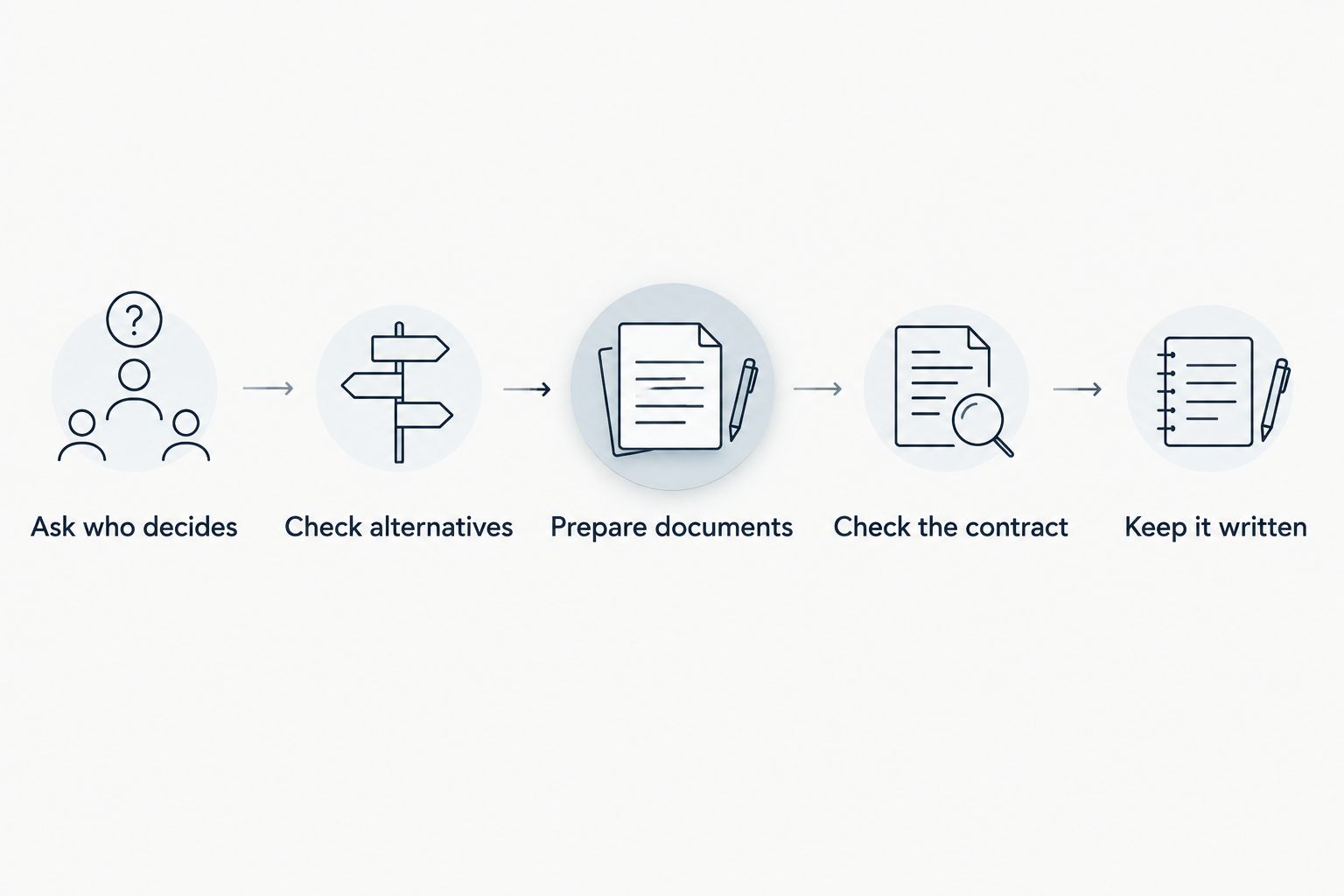
This sequence does not make an ineligible application eligible. It prevents a common mismatch: proving that you can pay rent when the provider has already said it requires a Dutch guarantor regardless of your documents. Get that distinction clear before arranging a viewing.
Which alternative should you ask about?
Student funding is best for students who can document it clearly. An award letter or other current funding record gives the provider something specific to assess. Its drawback is that a landlord can still apply a separate guarantor rule; funding evidence is not a substitute unless the provider says it is.
Savings evidence is best for students whose living costs are covered without a regular salary. It can explain how you intend to pay rent, but it exposes sensitive financial information and might not satisfy a provider looking for recurring income. Ask what evidence is necessary before sharing account records.
A guarantor outside the Netherlands is best for students who have a willing supporter abroad. The advantage is that you do not need to find someone living in the Netherlands if the provider accepts a foreign guarantor. The limitation is substantial: acceptance, document requirements and the guarantor's obligations need to be confirmed for the particular lease. Do not ask someone to sign until they understand what the agreement says.
A different listing is best when the Dutch-guarantor rule is non-negotiable. It saves you from trying to persuade a provider whose screening policy excludes your application. The trade-off is another search, so state your circumstances early when you contact the next advertiser.
Why do guarantor requirements vary?
There is no useful answer to the guarantor question that ignores the listing. Check these factors for each home you consider in 2026:
- Provider rules. A student housing provider and a private landlord can request different documents. Ask for the requirements attached to the actual property, not a general statement about renting in the Netherlands.
- Your financial evidence. A provider assessing affordability needs to know what resources it will consider. An enrollment letter establishes student status; it does not, by itself, explain how rent will be paid.
- The proposed guarantor. If you have someone outside the Netherlands, ask whether their location is acceptable before gathering their personal and financial records.
- The type of rental. A room and an independent apartment can involve different application processes. Do not reuse an approval assumption from one listing on another.
- Who is applying. If you plan to rent with someone else, ask whether the provider assesses each applicant separately or the application together. Get the answer before deciding whose documents to submit.
- The lease terms. Even if your application is accepted, read the agreement to see who is named as tenant or guarantor and what each person is agreeing to do.
These are screening questions, not shortcuts around a stated requirement. A provider can consider your documents and still decline the application. Treat a written answer for the specific home as more useful than a general claim that students do or do not need guarantors.
Can my parents abroad act as guarantors?
Yes, if the landlord or housing provider accepts a guarantor who lives abroad. Ask which documents your parents would need to supply, how they would sign and what obligations the agreement gives them. Their willingness alone does not mean the application will qualify.
Can I use a scholarship instead of a Dutch guarantor?
A scholarship can support your application if the provider accepts it as financial evidence. Submit documentation showing what funding applies to you, and ask whether it replaces the requested guarantor or merely supplements your application. That answer belongs to the provider, not the listing category.
Should I sign a lease before arriving in the Netherlands?
You can arrange a remote viewing and lease signing without traveling, but check the property, the person offering it and the contract before you commit. Remote signing changes where you sign, not what you need to verify. Read the terms yourself even if someone has helped coordinate the viewing.
What if the listing says a Dutch guarantor is required?
Ask whether the wording describes a firm condition or whether the provider reviews alternatives. If the answer is that a Dutch guarantor is mandatory, do not present a foreign guarantor or savings statement as an automatic equivalent. Search for a property whose provider will assess the documents you actually have.
For 2026 searches, keep a short record of each listing's answer: who replied, which alternatives were accepted and which documents were requested. That prevents you from repeating the same question and helps you compare application routes without confusing one landlord's rules with another's.
When does remote rental help fit?
Remote help addresses a different barrier from guarantor approval. Relocify Search lets individuals manage their own housing search and document review with automated assistance. Relocify Plus is the assisted service in which the team finds an apartment for you. Neither description establishes that a landlord will waive a guarantor condition.
Relocify rental search is best for students who need to find and view homes before traveling to the Netherlands; it is not a solution to a mandatory guarantor rule. Use the provider's answer to decide which listings deserve an application, then use remote viewing and document review to assess the home you can actually apply for. If you need details about services or current terms, check them directly before choosing a route.
Start your Dutch rental search
Explore rentals and remote viewing options before you travel.
FAQ
Can international students rent in the Netherlands without a Dutch guarantor in 2026?
Yes, if the landlord or housing provider accepts their application without one. Ask for the screening requirements for the specific rental before submitting documents.
Is a Dutch guarantor required for every student rental?
No, a Dutch guarantor is not a universal requirement for every student rental. The provider decides what financial evidence it requires for its property.
Can a guarantor who lives abroad support my application?
Yes, if the provider accepts a guarantor based abroad. Confirm its document and signing requirements before asking anyone to take on that obligation.
Does proof of savings replace a guarantor?
Proof of savings replaces a guarantor only when the provider agrees to assess it that way. Ask what evidence is accepted rather than assuming a bank statement overrides a stated rule.
Will an enrollment letter be enough to rent a Dutch apartment?
An enrollment letter shows your student status, but it does not necessarily satisfy financial screening. Ask what the landlord requires alongside proof of enrollment.
Can I rent a Dutch home before visiting it in person?
A rental can be viewed and signed for remotely when the provider supports that process. Verify the property, the advertiser and the lease before committing.
Does Relocify provide a Dutch rental guarantor?
No guarantor service is stated among Relocify's offerings. Relocify supports Dutch rental search and remote viewing, while acceptance remains with the housing provider.
One last thing
In 2026, the most useful question to send with an inquiry is: Will you consider an international student without a Dutch guarantor, and which documents do you accept instead? It invites a decision about that home rather than a general answer about Dutch renting. If the reply is unclear, ask again before sharing sensitive records or making plans around the property.