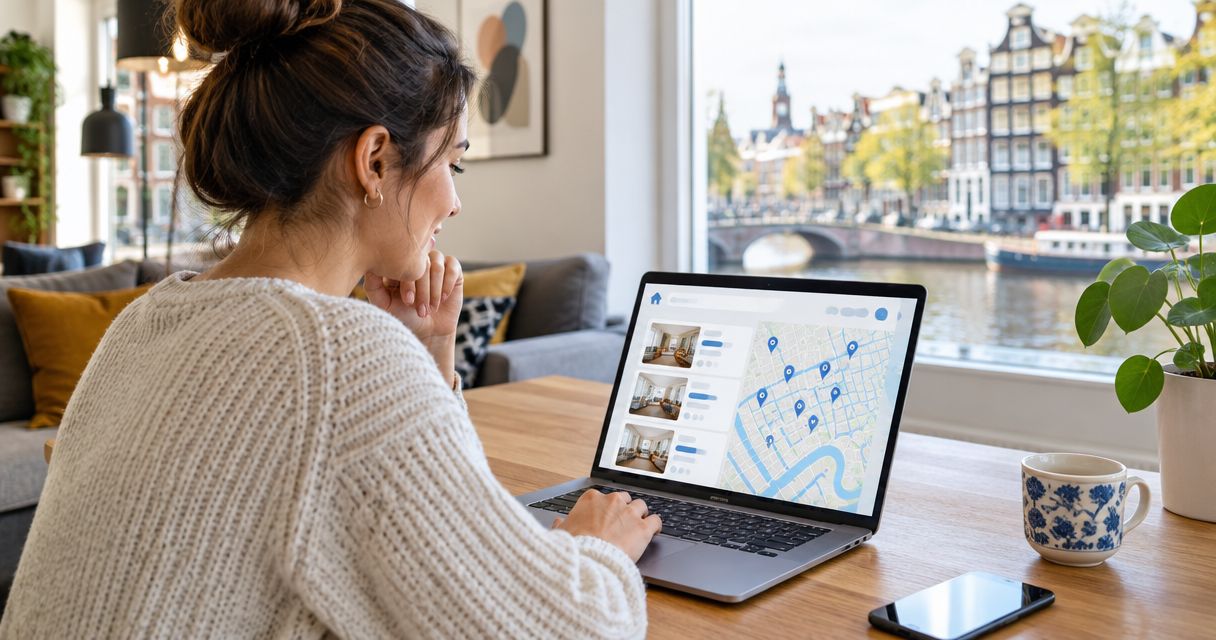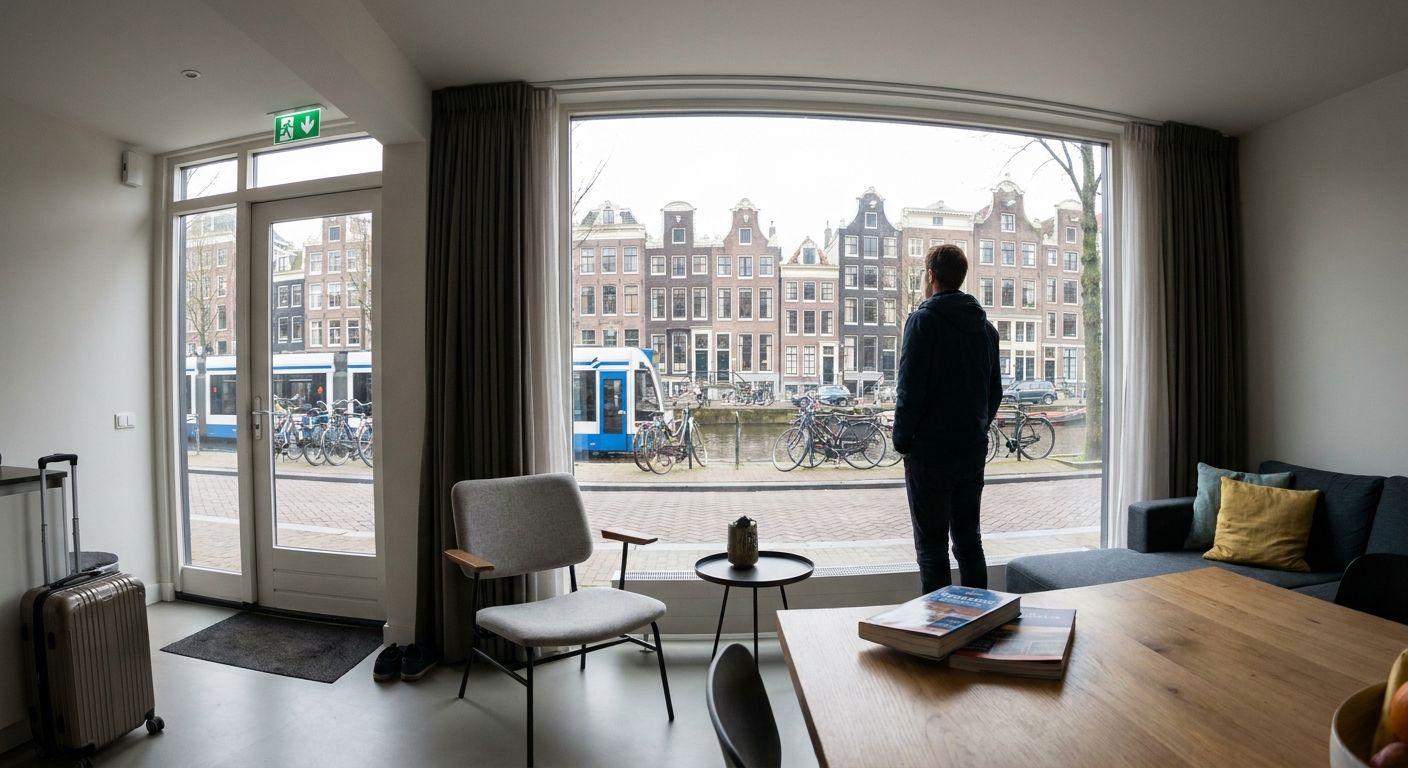
Finding a place to sleep in Amsterdam while the real lease search plays out is its own project, and expats who wait until landing to figure it out usually overpay or end up in a hostel dorm for six weeks. This guide ranks the six realistic temporary housing routes for 2026, with a verdict on each.
- Corporate housing programs are the safest temporary housing amsterdam expats option when an employer is footing the bill — Buy.
- Serviced apartments from vetted agencies beat Airbnb on legality and length of stay — Buy for 30 to 90 day gaps.
- Short-term sublets look cheap but violate Dutch short-stay rules past 60 days in many buildings — Skip for anything longer.
- Extended-stay hotels are the fastest to book but the most expensive per night past week two — Hold.
- Relocify pairs temporary housing with the permanent search so you don't rebook twice — Buy.
Why this matters
Amsterdam's permanent rental market moves fast and viewings often require you to already be in the country. That creates a gap — usually four to twelve weeks — where you need a legal, bookable address before the real lease is signed. Get the temporary housing choice wrong and you're either paying hotel rates for two months or signing a sublet that can't legally register you with the municipality, which then blocks your BSN application and everything downstream of it.
The Relocify platform exists because this gap is the single most stressful part of relocating to the Netherlands, and it's solvable with the right sequencing rather than luck.
How this list was ranked
Each option below is scored against three things that actually matter for a 2026 move: legal registration compatibility (can you get a BRP address from it), booking lead time, and cost per night once you pass the 30-day mark. Options that fail the registration test get downgraded regardless of price, because a missing BSN stalls your bank account, health insurance, and eventually your real lease. Pricing patterns reflect what corporate relocation teams and rental agencies in Amsterdam commonly report for 2026 bookings, not a single fixed rate — ranges vary by neighborhood and season.
The ranked list
1. Corporate housing programs — the safe pick when your employer is paying
Most multinational employers relocating staff to Amsterdam in 2026 arrange corporate housing directly with a serviced-apartment or relocation partner, covering 30 to 90 days as standard. This route gets you a furnished, fully legal address that supports BRP registration from day one, which matters more than almost anything else on this list.
Companies that skip this step often see new hires spend their first two weeks hunting for a hotel extension instead of starting work. If your offer letter mentions relocation support, ask specifically about corporate housing for relocating employees in Amsterdam before you book anything yourself. Verdict: Buy — take it if it's offered, and push for it if it isn't.
2. Serviced apartments from vetted agencies — the flexible middle ground
Serviced apartment operators in Amsterdam run furnished units with 30-day minimum stays as the industry norm, and unlike private sublets, they're set up for legal registration. Booking lead time runs one to three weeks in 2026, shorter than most permanent leases and far shorter than hostel-to-apartment transitions.
The tradeoff is price: expect a premium over an unfurnished long-term lease per square meter, though it's usually cheaper than a hotel past the two-week mark. Vetting matters here — not every provider handles registration the same way, so cross-check against a list of best accommodation providers for corporate relocation before wiring a deposit. Verdict: Buy for stays of 30 to 90 days.
3. Extended-stay hotels and aparthotels — fastest to book, priciest to hold
Aparthotels and extended-stay brands let you book same-week with no minimum stay, which makes them the default panic option for anyone landing in Amsterdam without a plan. Nightly rates are competitive for the first week or two, then stop scaling down the way serviced apartments do.
The bigger issue for 2026 arrivals: most hotel addresses can't be used for BRP municipal registration, which means your BSN, bank account, and health insurance all stay blocked. Verdict: Hold — use it as a bridge for the first 5 to 10 days, not a full temporary housing solution.
4. Short-term sublets via listing platforms — the wildcard
Platforms like Airbnb, Kamernet, and short-stay listings on Pararius look like the cheapest option on paper, especially for stays under a month. The catch: many Amsterdam buildings and VvE associations restrict short-stay subletting, and a landlord operating outside those rules can't offer you a registrable address either.
For a two-week bridge before a corporate apartment kicks in, a vetted sublet works fine. Past 60 days, the legal exposure and registration gap make this a bad trade. Verdict: Skip for anything beyond a short bridge, Consider for under 30 days.
5. Co-living and hostel-style shared housing — the budget pick
Co-living operators with locations in Amsterdam offer private rooms with shared common space, priced below both hotels and serviced apartments on a per-night basis. Some locations do support municipal registration, which puts this ahead of hostels and most sublets on the legal-compatibility test.
Space is the real constraint — rooms run small, and privacy is limited if you're relocating with a partner or family. Solo movers under 30 handling a straightforward job relocation get the most value here. Verdict: Consider for solo, budget-conscious moves.
6. A relocation platform that bridges temp and permanent housing
Rather than booking temporary housing and the permanent lease as two separate projects, Relocify Search lets you handle the whole sequence — remote viewings, document review, lease signing — without a second search once your temporary stay ends. Relocify Plus goes further and has a team source the apartment for you directly, which matters most when you're juggling a new job and can't spend evenings refreshing listing sites.
The advantage over booking a serviced apartment cold is continuity: your temporary housing and permanent search run on the same timeline instead of resetting the clock twice. Verdict: Buy if you want one process instead of two.
Line up your Amsterdam housing now
Compare Relocify Search and Relocify Plus before you book a bridge stay.
Comparison table
| Option | Min. stay | BRP registration | Booking lead time | Verdict |
|---|---|---|---|---|
| Corporate housing | 30-90 days | Yes | 1-4 weeks | Buy |
| Serviced apartments | 30 days | Yes (vetted providers) | 1-3 weeks | Buy |
| Extended-stay hotels | None | Rarely | Same week | Hold |
| Short-term sublets | Days-weeks | Inconsistent | Days | Skip past 60 days |
| Co-living / shared housing | Weeks | Sometimes | 1-2 weeks | Consider |
| Relocify (Search/Plus) | Flexible | Supports full lease path | Varies | Buy |
Before you book: pick the neighborhood first
Temporary housing decisions go sideways when people book based on price alone and land 45 minutes from where they'll actually work or where schools are. Amsterdam neighborhoods vary sharply on commute time, noise, and international-school proximity, and picking the wrong one for even a 60-day stay makes the permanent search harder because you're now house-hunting from the wrong side of the city.
Work through how to choose an area to live in as an expat in the Netherlands before locking in a temporary address, not after.
Where to book
- Go through your employer's relocation partner first. If corporate housing is on the table, it's almost always cheaper and more compliant than anything you'd book solo.
- Never wire a deposit for a sublet you haven't verified against the building's VvE rules. A cheap listing that can't register you costs more in delayed BSN and banking access than it saves in rent.
- Book serviced apartments through an agency with a track record in Amsterdam specifically, not a national chain unfamiliar with local registration quirks.
FAQ
What's the best temporary housing for expats in Amsterdam in 2026?
Corporate housing arranged through an employer is the strongest option in 2026 because it supports BRP registration and typically covers 30 to 90 days. Serviced apartments from a vetted agency are the best self-funded alternative.
Is Airbnb better than a serviced apartment for temporary housing in Amsterdam?
No, a serviced apartment is generally better because it's set up for legal municipal registration, while many Amsterdam Airbnb listings operate under short-stay restrictions that block BSN registration. Airbnb only makes sense as a bridge under 30 days.
How much does temporary housing cost in Amsterdam?
Costs vary by neighborhood and provider, but serviced apartments generally run at a premium over unfurnished long-term rent, while extended-stay hotels cost more per night the longer you stay past two weeks. Corporate housing costs depend on the employer's negotiated rate.
Do I need to register my address within days of arriving in Amsterdam?
Yes, the Netherlands requires municipal (BRP) registration within 5 days of taking up an address if you plan to stay longer than four months. Your temporary housing address must support this registration or your BSN application stalls.
Can I use a hostel as temporary housing while apartment hunting in Amsterdam?
A hostel works as a short bridge of a week or two but rarely supports BRP registration, which blocks your BSN, bank account, and health insurance setup. Co-living operators are a better budget option if registration matters.
How long does temporary housing typically last before a permanent lease in Amsterdam?
Most expats need 30 to 90 days of temporary housing while completing document review, viewings, and lease signing on a permanent rental. Using a platform that handles both stages on one timeline shortens that window.
What happens if my temporary housing doesn't support registration?
Without a registrable address, you can't get a BSN, which then blocks opening a Dutch bank account and enrolling in health insurance. Always confirm registration support before booking, not after signing.
Is it better to book temporary housing before or after arriving in the Netherlands?
Book before arriving whenever possible, since same-week bookings in Amsterdam are dominated by expensive extended-stay hotels with no minimum stay flexibility. Serviced apartments and corporate housing both require one to three weeks of lead time for the best rates.
One last thing
The detail most people miss in 2026: your temporary address isn't just a place to sleep, it's the address your municipality registration, BSN, and bank account all hang off of for the first months. Pick the option on this list that supports registration even if it costs more per night — the alternative is losing weeks untangling paperwork that should have taken days.