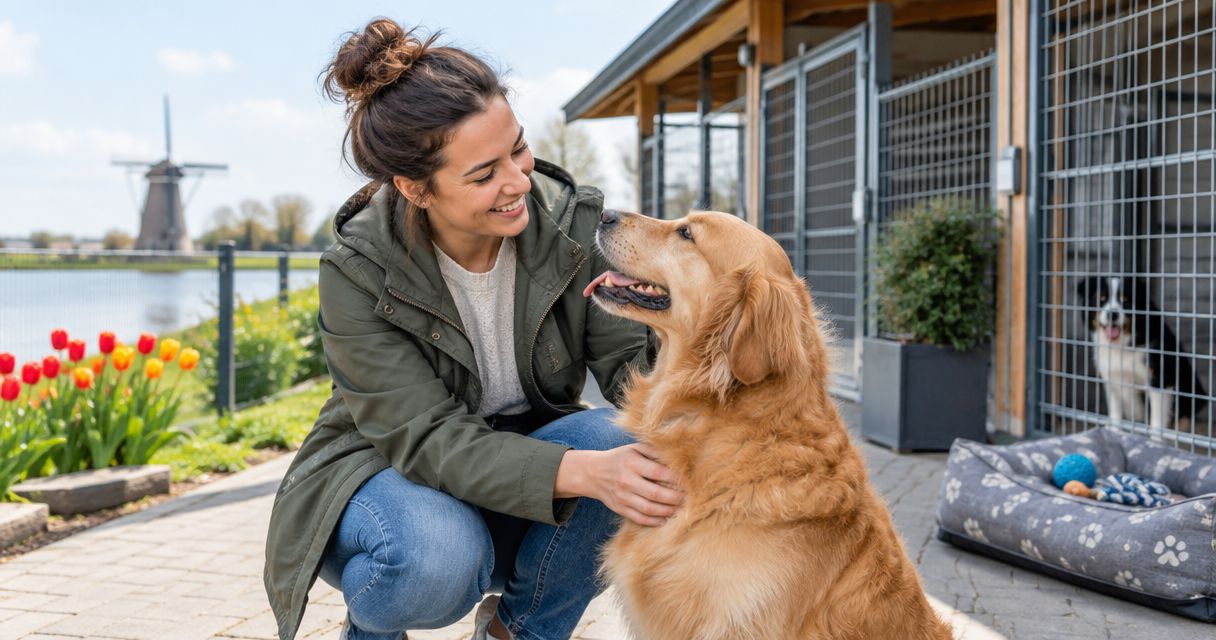
Expats moving to the Netherlands rarely plan for their pet's first weeks in the country, and the wrong pet boarding choice during a house hunt, a visa trip home, or moving day creates more stress than the move itself.
- Dierenpensions (traditional Dutch boarding kennels) top the list of best pet boarding services in the Netherlands for expats with sociable dogs.
- Kattenpensions (cat-only boarding) beat mixed kennels for cats because no dog scent or barking triggers stress.
- Verified home pet-sitting networks work best for anxious, senior, or medicated pets that don't do well in group housing.
- Vet-affiliated boarding takes more effort to book but is the right call for pets with chronic conditions.
- Dutch kennels fill up fast around the six-week summer school holiday and Christmas -- book as early as your moving date allows.
Why this matters
Relocating to the Netherlands already means juggling a lease signature, a BSN appointment, and a stack of remote viewings. If you're using Relocify to line up pet-friendly rental housing in the Netherlands at the same time, pet boarding becomes a second logistics track: where does the dog or cat stay during the two or three days you can't have them in a hotel room, a temporary rental, or a moving truck.
Get the pet boarding piece wrong and you pay for it twice -- once in a stressed animal, once in a scramble for same-week space during Dutch peak season. Get it right and it becomes a non-issue: pick the category that fits your pet's temperament and your timeline, drop them off, focus on the move.
This guide ranks the pet boarding categories that actually exist in the Netherlands in 2026, not a single directory listing, because the right answer depends on whether you have a dog, a cat, an anxious rescue, or a pet on daily medication.
The best pet boarding services in the Netherlands for expats in 2026
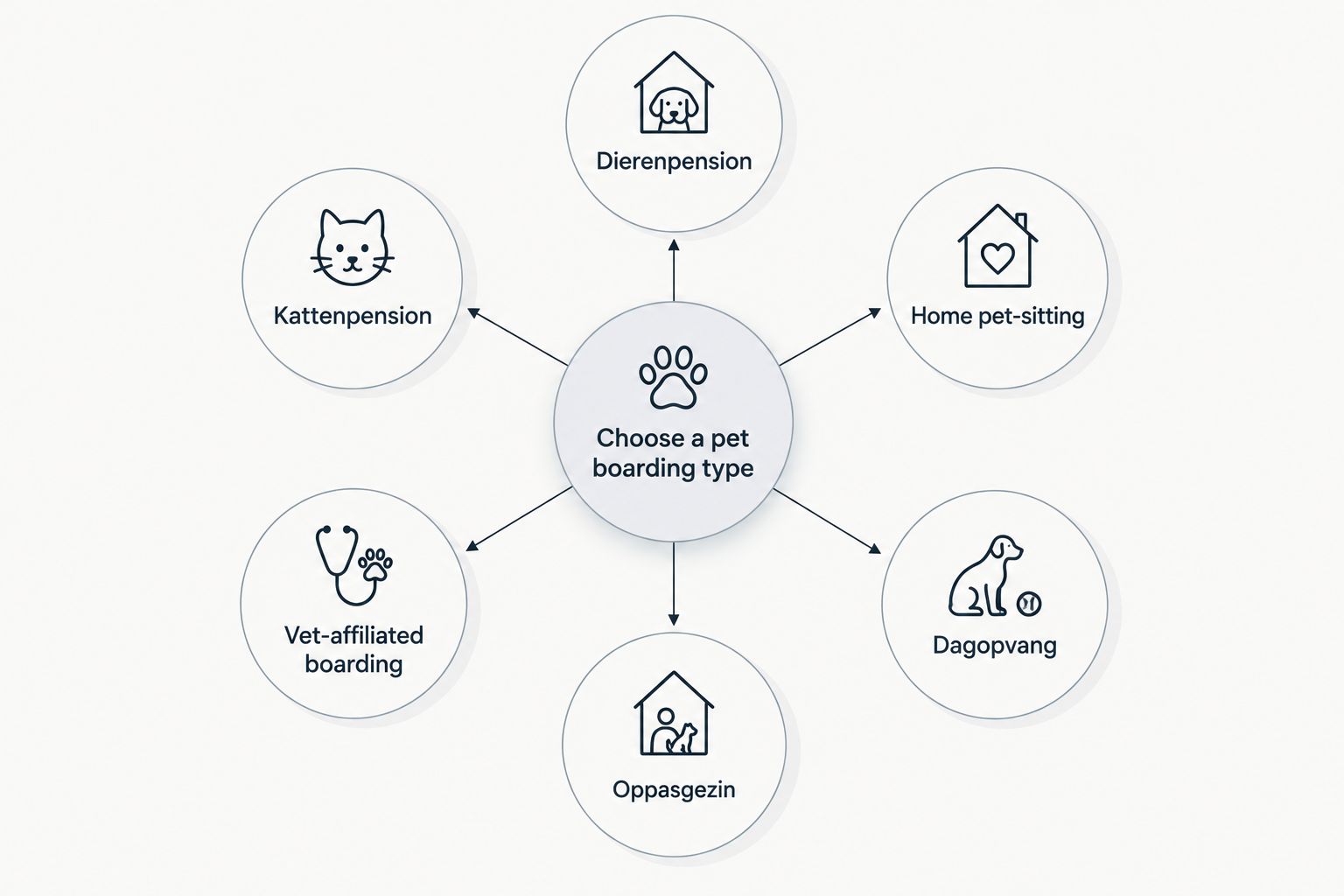
Best overall: dierenpension (traditional boarding kennel). Best for cats: kattenpension (cat-only boarding). Best for anxious or senior pets: a verified home pet-sitting network. Best for pets on medication: vet-affiliated boarding. Best for daytime-only gaps: dagopvang (daycare-only centers). Best budget option for long house-hunting stretches: oppasgezin (host-family boarding).
What makes the best pet boarding service for expats
- RVO registration -- Dutch boarding facilities fall under the Besluit houders van dieren; a registered pension has to meet space and staffing rules, an unregistered one does not.
- Group supervision ratio -- how many staff are on-site per group of dogs or cats during the day and overnight.
- Health requirements -- an up-to-date kennel cough vaccination, typically renewed annually, and for cats, a recent clean bill of health.
- English-speaking staff -- most kennels operate in Dutch first; confirm before you book if you need to explain a medical condition or feeding schedule in English.
- Booking flexibility -- almost none have room during the six-week Dutch summer school holiday without lead time.
- Proximity to your move -- a kennel 40 minutes from your new address adds a drop-off and pickup trip on top of an already packed moving week.
Pet boarding services in the Netherlands: at a glance
| Type | Best for | Standout feature | Key limitation |
|---|---|---|---|
| Dierenpension | Sociable dogs | Outdoor group play and structured daily routine | Not right for anxious or reactive dogs |
| Kattenpension | Cats | No dogs on-site, individual or small-group cat rooms | Fewer locations than dog kennels |
| Home pet-sitting network | Anxious or senior pets | One-on-one care in a home setting, no kennel stress | Quality varies by sitter -- vet the profile carefully |
| Vet-affiliated boarding | Pets on medication | On-site veterinary staff can administer treatment | Usually the most limited availability |
| Dagopvang | Daytime-only gaps | Drop-off in the morning, pickup same evening | Not built for overnight stays |
| Oppasgezin (host family) | Long house-hunting stretches | Pet lives in a real home for days or weeks | Harder to vet remotely as a new arrival |
1. Dierenpension: best pet boarding in the Netherlands for expats with dogs
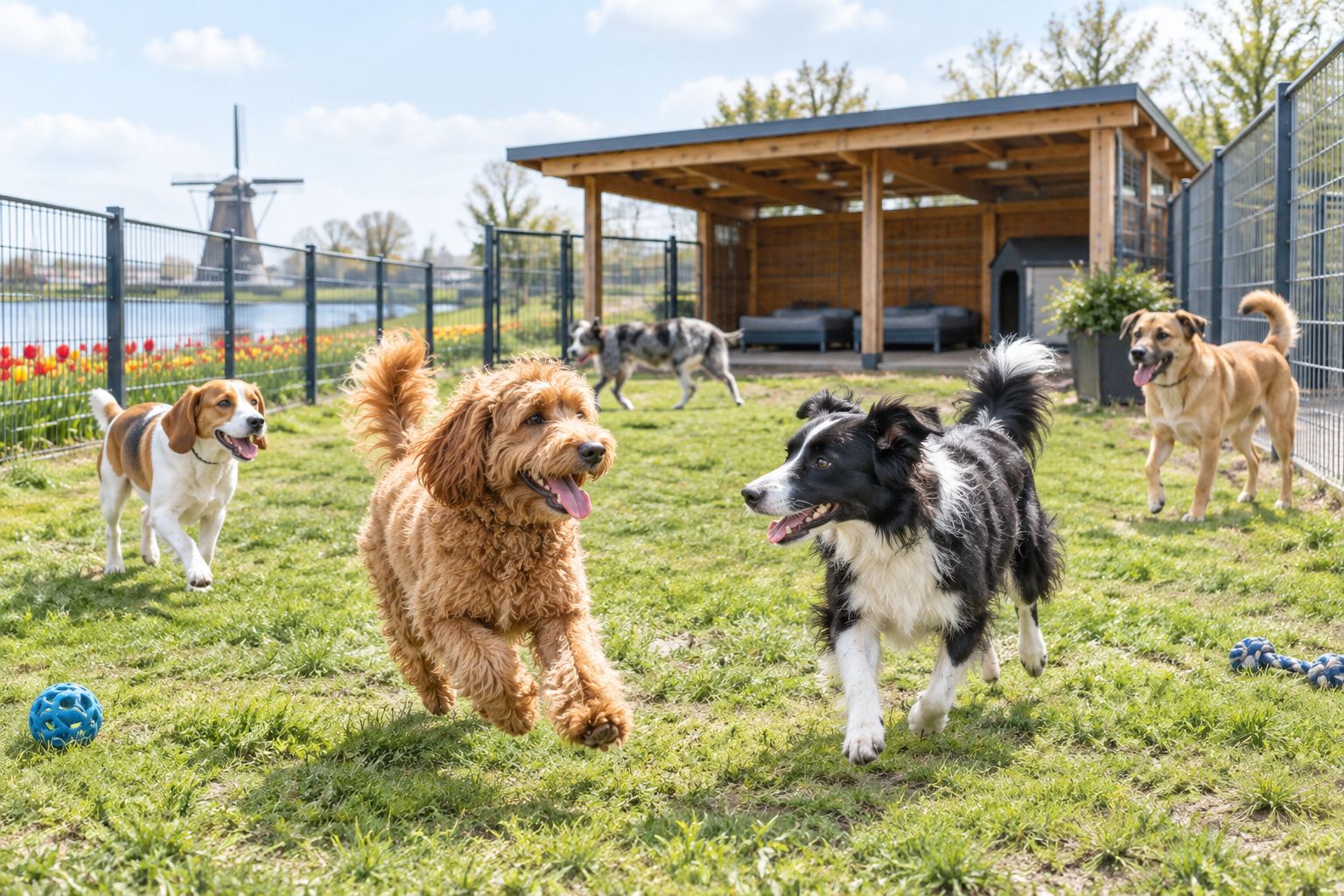
A dierenpension is the traditional Dutch boarding kennel: dogs stay in individual or shared runs, get scheduled outdoor group play, and follow a set daily routine. It's the default option most Dutch pet owners use, and most facilities are registered under national animal welfare rules. For an expat without a Dutch-speaking network yet, it's usually the easiest option to find and book online.
Dierenpension pros:
- Structured routine most dogs adapt to within a day or two
- Outdoor space and other dogs for socialization
- Widely available -- most Dutch towns have at least one registered pension
- Straightforward online booking, even for a first-time customer
Dierenpension cons:
- Group housing doesn't suit reactive or anxious dogs
- Peak season (the six-week summer school holiday, Christmas) books out fast
- Staff communication defaults to Dutch at smaller, family-run locations
Verdict: Book it for a sociable dog and a routine drop-off -- the best pet boarding option in the Netherlands for expats who need a reliable default.
2. Kattenpension: best pet boarding in the Netherlands for cats
A kattenpension keeps cats in their own building or wing, away from barking dogs, in individual or small shared rooms. Cats stress more than dogs from unfamiliar noise and scent, so a dedicated cat facility usually means a calmer animal at pickup.
Kattenpension pros:
- No dogs on-site -- lower baseline stress for most cats
- Individual rooms with climbing space at better facilities
- Staff generally handle cat-specific health questions well
Kattenpension cons:
- Fewer locations than dog kennels, especially outside the Randstad
- Some require a recent vet check before drop-off
- Booking windows shrink fast around Dutch school holidays
Verdict: Book it over a general kennel every time you have a cat -- mixing species rarely goes well for the cat.
3. Home pet-sitting network: best for anxious or senior pets
A verified home pet-sitting network places your pet with a vetted individual sitter who cares for them in a home rather than a facility. This suits pets that shut down in group kennels -- older animals, rescues with a bite or noise history, or anything on a strict routine a kennel can't replicate.
Home pet-sitting pros:
- One-on-one attention instead of a group setting
- A home environment reduces stress for pets that hate kennels
- Sitters often accommodate a specific feeding or medication schedule
Home pet-sitting cons:
- Quality depends entirely on the individual sitter -- read reviews and ask for references
- Harder to verify from abroad before you've arrived in the Netherlands
- Availability is less predictable than a registered facility
Verdict: Book it for an anxious or senior pet, and vet the sitter's profile before you commit -- this isn't the category to book blind.
4. Vet-affiliated boarding: best for pets on medication
Some Dutch veterinary clinics run a small boarding wing alongside their regular practice. Staff can administer medication on schedule and monitor a chronic condition, which a standard kennel generally can't offer.
Vet-affiliated boarding pros:
- On-site veterinary staff for medication and monitoring
- Faster response if a health issue comes up mid-stay
- Useful for a pet recovering from a procedure
Vet-affiliated boarding cons:
- Usually the most limited capacity of any category on this list
- Often takes more effort to book -- call ahead rather than booking online
- Not built for social dogs that just want playtime
Verdict: Book it only if your pet needs regular medication or monitoring -- otherwise a dierenpension or kattenpension does the job at lower hassle.
Search pet-friendly rentals on Relocify
Line up housing and boarding on the same timeline before your move-in date.
5. Dagopvang: best for daytime-only gaps
Dagopvang is daycare, not boarding -- drop your pet off in the morning and pick them up the same evening. It's built for the day you have back-to-back apartment viewings or a moving crew in the house, not for an overnight stay.
Dagopvang pros:
- Cheaper time commitment for a single stressful day
- Good socialization for dogs that already do well with other animals
- No overnight separation anxiety
Dagopvang cons:
- Doesn't solve an overnight or multi-day gap
- Availability concentrates in larger cities
- Still requires the same vaccination paperwork as overnight boarding
Verdict: Book it for a single moving day or a run of viewings, not a real trip -- it's a day solution, not a boarding solution.
6. Oppasgezin (host family): best for long house-hunting stretches
An oppasgezin places your pet with a host family for days or weeks at a time, closer to a long-term foster than a kennel stay. For expats stuck between a temporary rental and a signed lease, it's often the only option built for a stay measured in weeks rather than days.
Oppasgezin pros:
- Built for multi-week stays, unlike most kennels
- A real home environment for the full stretch
- Often more affordable per day for extended stays than a facility
Oppasgezin cons:
- Harder to vet remotely if you haven't met the family
- Fewer regulated options than registered kennels
- Less oversight than a registered facility if something goes wrong
Verdict: Book it if your house search runs past two or three weeks and a kennel stay isn't realistic -- just meet the family or get a video call in first.
How we ranked these pet boarding options
Each category above is judged against the same six criteria: RVO registration status, on-site supervision ratio, health and vaccination requirements, English-language support, booking flexibility during Dutch peak season, and how well the option fits an expat's actual moving timeline rather than a settled local's routine. No single category wins across all six -- that's why this list ranks by use case instead of forcing one winner.
Which pet boarding option should you choose?
If your dog is sociable and you need a straightforward, bookable option, a dierenpension is the default answer in 2026. If you own a cat, skip the dog kennels entirely and go straight to a kattenpension. Anxious, senior, or medicated pets do better outside a facility altogether -- a vetted home sitter or a vet-affiliated boarding wing beats a group kennel every time for that profile.
Relocify's home-finding tools cover the rental side; pairing that with the right pet boarding pick above closes the loop. If you're still working through pet relocation services for the Netherlands, lock down microchip and rabies titre paperwork before you even start calling kennels, since several facilities ask for proof before drop-off.
FAQ
What's the best pet boarding option in the Netherlands for a dog?
A dierenpension (traditional boarding kennel) is the best pet boarding option in the Netherlands for a sociable dog in 2026. It offers structured daily routines, outdoor group play, and wide availability across Dutch cities.
Is a kattenpension better than a regular kennel for a cat?
Yes -- a kattenpension keeps cats away from barking dogs and unfamiliar kennel noise, which lowers stress compared to a mixed-species facility. Look for individual or small-group rooms with climbing space.
How much does pet boarding cost in the Netherlands?
Pricing varies by city, animal type, season, and length of stay in 2026, so get a direct quote from the facility rather than relying on a published rate. Peak-season pricing around summer holidays and Christmas tends to run higher across all categories.
Do I need a vet check before boarding my pet in the Netherlands?
Most Dutch boarding facilities require an up-to-date kennel cough vaccination for dogs and a recent clean bill of health for cats before drop-off. Vet-affiliated boarding wings may ask for additional records if your pet is on medication.
Can I book pet boarding in English as an expat?
Larger kennels and catteries in cities like Amsterdam, Utrecht, and Rotterdam generally handle English bookings without issue. Smaller, family-run pensions default to Dutch, so confirm language support before you book.
How far ahead should I book a Dutch kennel?
Book as early as your moving date allows, especially around the six-week Dutch summer school holiday and the Christmas period, when availability disappears fastest. Facilities near major cities book out weeks ahead during these windows.
What's the best pet boarding option during a single moving day?
Dagopvang (daycare-only boarding) is built for exactly this -- drop your pet off in the morning and pick them up the same evening. It skips the overnight commitment of a full kennel stay.
One last thing
Book boarding before you book flights home. Dutch kennels and catteries fill their calendars around the six-week summer school holiday months in advance, and by the time your visa appointment or home visit is confirmed, the good facilities near your new address may already be full for those dates. If you're mid-move and still finalizing how to import a pet to the Netherlands, get that paperwork done first -- most boarding facilities won't take a pet without an EU pet passport or the equivalent import documentation on file.