Family reunification visa holders moving to the Netherlands face one housing hurdle that standalone expats never deal with: proving the sponsor's home already meets IND and municipality registration standards before the residence permit gets approved. The housing search isn't just about finding a place you like — it's about a lease, a landlord's consent, and a BRP registration slot that all have to line up before your MVV or residence permit appointment.
- Family reunification visa housing in the Netherlands depends on the sponsor's existing lease accepting an added occupant, not just on finding a new place.
- Landlords must give written consent before a family member can register at the address with the municipality — verbal approval isn't enough.
- IND aims to decide family reunification applications within 90 days in 2026, so housing paperwork needs to be ready before, not after, the appointment.
- Relocify Search lets family reunification visa holders review lease documents and consent letters remotely before travel; Relocify Plus assigns a team to handle the search directly.
Why housing matters differently for family reunification visa holders
Most expat housing guides assume you're renting fresh, with your own income and your own name on a new lease. Family reunification visa holders are usually joining someone who already has an address, and that changes almost every step.
The sponsor's landlord has to agree, in writing, to add a name to the lease or to a co-tenancy arrangement. The municipality won't register a second adult at an address the landlord hasn't cleared. And if the sponsor's income alone doesn't cover the household size requirement, the family reunification application can stall even after the visa itself is approved.
None of this shows up in a generic "how to rent in the Netherlands" guide, because it doesn't apply to a single expat renting solo. It's specific to anyone moving under a family reunification visa in 2026, and it's the reason housing prep needs to start before the MVV appointment, not after landing.
Step-by-step: housing for family reunification visa holders in 2026
Confirm the sponsor's housing meets IND and municipality standards
Before anything else, check whether the sponsor's current home can legally hold another registered adult. Overcrowded addresses get flagged by municipalities during BRP registration, and that flag can delay your family reunification case.
- Ask the sponsor's landlord directly whether the lease permits additional occupants
- Check the property type — social housing (corporation-owned) has stricter occupancy rules than private rentals
- Confirm the current registered address has room on the BRP record for another adult
- Rule out short-stay or Airbnb-style leases, which municipalities often reject for permanent registration
Get the landlord's written consent before you file anything
A verbal "sure, that's fine" from a landlord does not satisfy the municipality. Get consent in writing, even if it's a short email confirming the added occupant.
- Request a signed addendum to the existing lease naming the new occupant
- If the landlord refuses to add a name, ask for a standalone consent letter instead
- Keep a copy of the original lease alongside any addendum for the BRP appointment
- If the sponsor rents through an agency, route the request through the agency, not the landlord directly
If the sponsor's landlord won't put your name on the lease in writing, the municipality can reject your registration even with a valid visa.
Verify household income if the sponsor's payslips alone fall short
Family reunification cases sometimes require proof the household can support an added member, particularly outside highly skilled migrant sponsorship. When the sponsor's Dutch payslip history is thin — recent hires, freelancers, career-switchers — extra documentation closes the gap.
- Combine the sponsor's employment contract with recent bank statements
- Add an employer letter confirming ongoing salary if payslip history is under three months
- Include savings statements when income alone doesn't cover the household size test
- Review income verification alternatives for expats without Dutch payslips if the sponsor's documentation is incomplete
The manual route works, but it takes coordination between the sponsor, their employer, and the bank — reviewing documents through Relocify's platform speeds up the same checklist without the back-and-forth email chain.
Line up a guarantor if the household has no Dutch rental history
Many landlords ask for a guarantor when neither the sponsor nor the incoming family member has a Dutch credit or rental track record. This is separate from the IND housing requirement, but it affects whether a new lease gets approved at all.
- Ask whether the sponsor's employer will act as guarantor for corporate-sponsored moves
- Compare independent guarantor options for non-EU expats renting in the Netherlands
- Check if a security deposit of several months' rent can substitute for a formal guarantor
- Confirm the guarantor requirement in writing before signing, since it varies by landlord
Register with the municipality inside the legal window
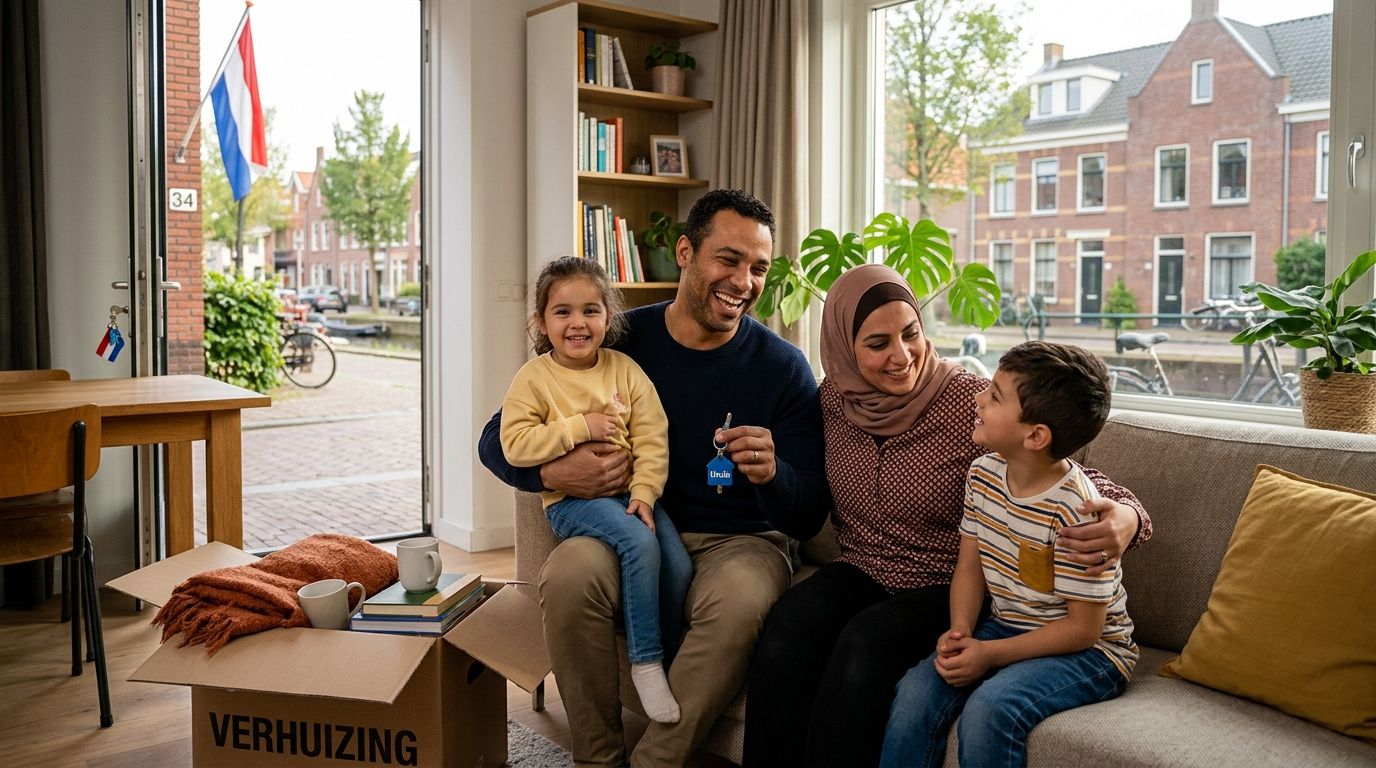
Once housing is confirmed, registration with the BRP (Basisregistratie Personen) has a hard deadline: you must register within 5 days of moving into permanent housing. Missing this window can delay the residence permit card issuance even after the family reunification decision is positive.
- Book the municipality appointment as soon as the move-in date is fixed
- Bring the signed lease or landlord consent letter, passport, and MVV sticker
- Confirm the sponsor's address matches exactly what's on file with IND
- Ask the municipality about appointment backlogs in larger cities before assuming a same-week slot
Enroll children before term start, not after arrival
If children are part of the family reunification case, school enrollment timelines run separately from housing and immigration paperwork, and popular international schools fill up faster than municipal registration moves.
- Start school applications the moment the sponsor's address is confirmed
- Check international schools near Amsterdam for relocating families if the sponsor's city has limited capacity
- Ask schools whether they accept provisional enrollment before the residence permit card is issued
- Confirm whether municipal registration is a prerequisite for the school's own enrollment paperwork
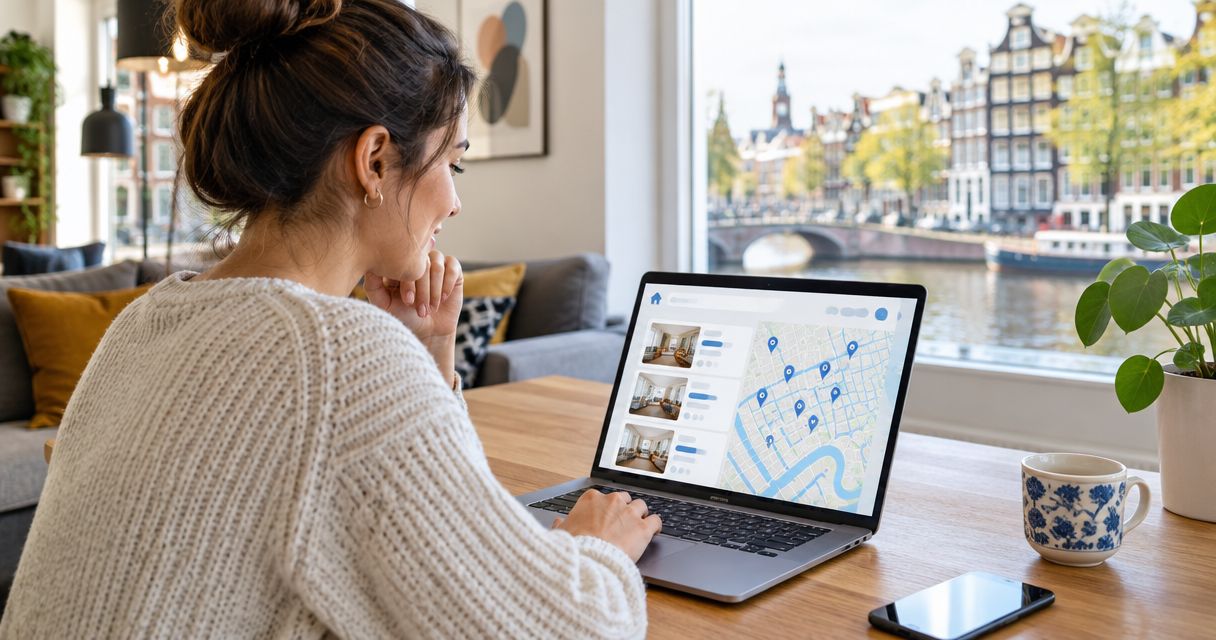
Sign the lease remotely if travel isn't possible before the visa appointment
Family reunification visa holders sometimes need housing confirmed before they can legally travel to the Netherlands. A remote-signing process avoids the standoff where the visa office wants proof of address and the landlord wants a signature in person.
- Ask the landlord or agency whether digital signatures are accepted for the lease
- Request a virtual walkthrough of the property before signing, especially for a co-tenancy addition
- Confirm the signed lease can be emailed directly to the family reunification applicant for the visa file
- Review how to sign a Dutch lease without visiting the property for the document sequence agencies expect
Get help with family reunification housing
Review lease and consent documents remotely before your visa appointment.
Comparing housing options for family reunification visa holders
| Option | Best for | Key limitation |
|---|---|---|
| Independent search + manual paperwork | Sponsors with strong Dutch language skills and time to chase landlords directly | Slow — landlord consent and municipality steps run sequentially, not in parallel |
| Relocify Search (AI-assisted, self-managed) | Family reunification households who want control but need document review and remote viewings | Still requires the household to make final decisions and handle landlord communication |
| Relocify Plus (assisted service) | Households short on time before the MVV appointment or unable to coordinate from abroad | Less hands-on for people who prefer to negotiate lease terms themselves |
| Local relocation agent (non-Relocify) | One-off local negotiations, particularly in smaller cities | Rarely specializes in family reunification's landlord-consent and BRP sequencing |
Relocify Search is the faster option for family reunification visa holders who want to review lease and consent paperwork themselves without hiring a full-service agent, and Relocify Plus is the better fit when the sponsor is already working full-time and can't chase landlords for signatures.
Common mistakes family reunification visa holders make
- Signing a new lease without checking the old one first — if the sponsor already has a lease, adding a name to it is usually faster than starting over, and skipping that check wastes weeks.
- Assuming income requirements are waived — they depend on the sponsor's permit type, and assuming an exemption that doesn't apply is one of the most common causes of a stalled file.
- Booking short-stay housing to "hold a spot" — municipalities frequently reject short-stay addresses for BRP registration, which then blocks the residence permit card.
- Missing the 5-day registration window — arriving without a firm move-in date scheduled ahead of time turns a routine appointment into a documented delay.
- Starting school enrollment after the residence permit is issued — by then, popular schools in cities like Amsterdam or The Hague may already be at capacity for the term.
FAQ
Does a family reunification visa require its own housing application?
No — in most cases the family member is added to the sponsor's existing lease or registered address rather than applying for separate housing. The key requirement is written landlord consent and municipality registration, not a new rental contract.
How long does IND take to decide a family reunification housing-linked application?
IND aims to decide standard family reunification applications within 90 days in 2026, though extensions happen when documentation is incomplete. Housing and landlord consent paperwork should be ready before the appointment to avoid adding delay.
Can a family reunification visa holder register at an address without the landlord's consent?
No — municipalities require written landlord consent before adding a new occupant to the BRP record at a rented address. Verbal agreement from a landlord is not accepted at the registration appointment.
What happens if the sponsor's home is considered overcrowded?
Municipalities can refuse to register an additional adult at an address flagged for overcrowding, which then blocks the family reunification housing step. Checking occupancy limits with the landlord before filing avoids this.
Is a guarantor required for family reunification housing in the Netherlands?
A guarantor is a landlord requirement, not an IND requirement, and applies mainly when neither the sponsor nor the incoming family member has Dutch rental history. Corporate sponsors sometimes act as guarantor directly.
Can a lease be signed remotely before a family reunification visa holder travels?
Yes — many landlords and agencies accept digital signatures and virtual walkthroughs for family reunification cases, which lets the visa file include a signed lease before travel. Confirm remote signing is accepted before relying on it for the visa appointment.
Does income verification differ for family reunification versus a standard expat rental?
The underlying documents are similar — payslips, employer letters, bank statements — but family reunification cases sometimes need the household's combined income assessed rather than one individual's income alone.
One last thing
The detail most family reunification visa holders miss isn't the visa paperwork — it's that the 5-day BRP registration deadline starts counting from the move-in date, not the visa approval date. Fixing the move-in date before travel, with landlord consent already signed, is what keeps the whole family reunification housing timeline from slipping into 2027.
Related guides
- How to get a guarantor for a Dutch rental as a non-EU expat
- Income verification alternatives for expats without Dutch payslips
- Best international schools near Amsterdam for relocating families
- How to sign a Dutch lease without visiting the property
- Spouse career support for relocating partners in the Netherlands