Retirees relocating to the Netherlands rent apartments through the same listing sites as anyone else, but landlords weigh pension income, savings proof, and guarantors differently than a salaried employee's payslip. This segment also cares more about ground-floor access, remote viewing, and getting Dutch health insurance sorted before move-in than about being near nightlife or a university campus.
- Apartments for rent in the Netherlands for retirees require pension or savings proof, not a payslip, and most landlords still ask for a guarantor.
- Relocify Search fits retirees who want to run the process themselves with AI-assisted document checks; Relocify Plus fits those who want a team to find and sign for them.
- Dutch basic health insurance is a legal requirement for registered residents in 2026 and should be arranged before or at move-in.
- Ground-floor units, elevator buildings, and remote video viewings matter more to this segment than to younger renters chasing a specific neighborhood.
Why this matters
A retiree without a Dutch employer looks like a risk on paper to a landlord who's used to seeing a payslip and an employment contract. That's not a judgment on creditworthiness — it's a documentation gap, and it's closable with the right paperwork lined up before you start applying. Skip that prep and you'll lose good listings to faster applicants while you scramble for proof of income mid-negotiation.
Retirees relocating in 2026 also face a housing market where fixed-term rental contracts for independent housing are largely restricted by Dutch law — most new leases default to indefinite terms unless a landlord qualifies for a specific exception. That's good news for anyone planning to stay put rather than move every year.
Why apartments for rent in the Netherlands matter for retirees
The standard Dutch rental checklist assumes a young professional: recent payslips, an employer reference, sometimes a company guarantee. Retirees relocating to the Netherlands rarely have any of that, so landlords fall back on pension statements, savings account balances, or a guarantor to cover the gap.
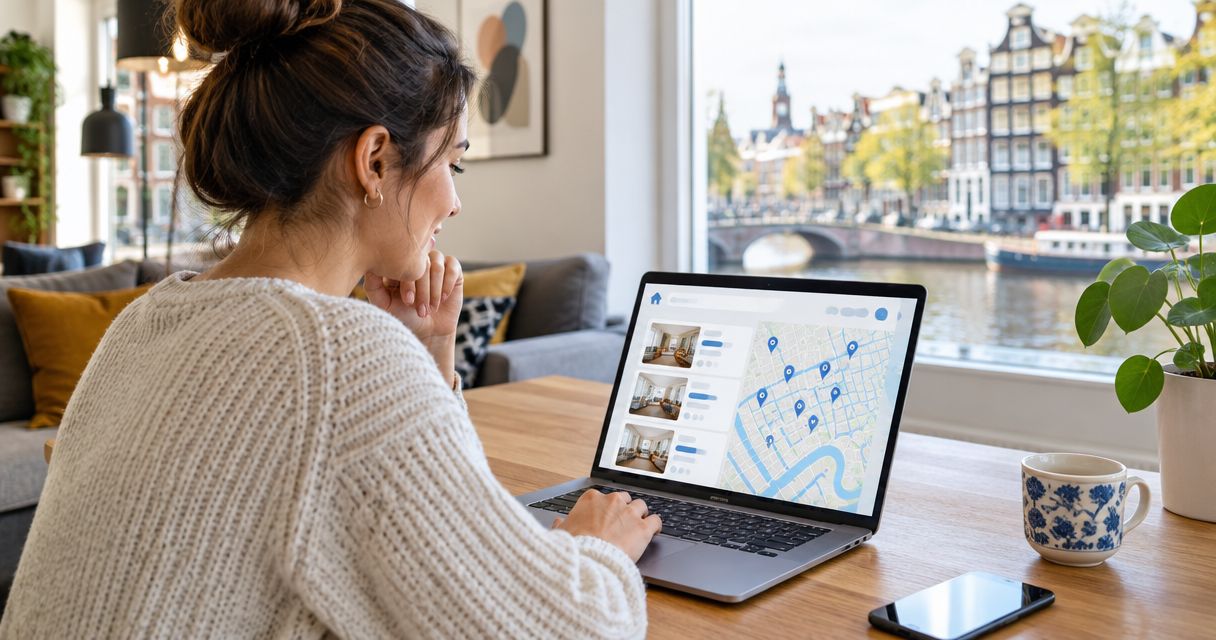
Relocify works with this reality by aggregating listings from housing sites and partner agencies and letting you review lease documents and get AI assistance without needing to be physically present in the country during the search. That matters more for retirees than for a 25-year-old scouting apartments between job interviews — flying to Amsterdam for a viewing weekend is a bigger ask when you're not also job hunting while you're there.
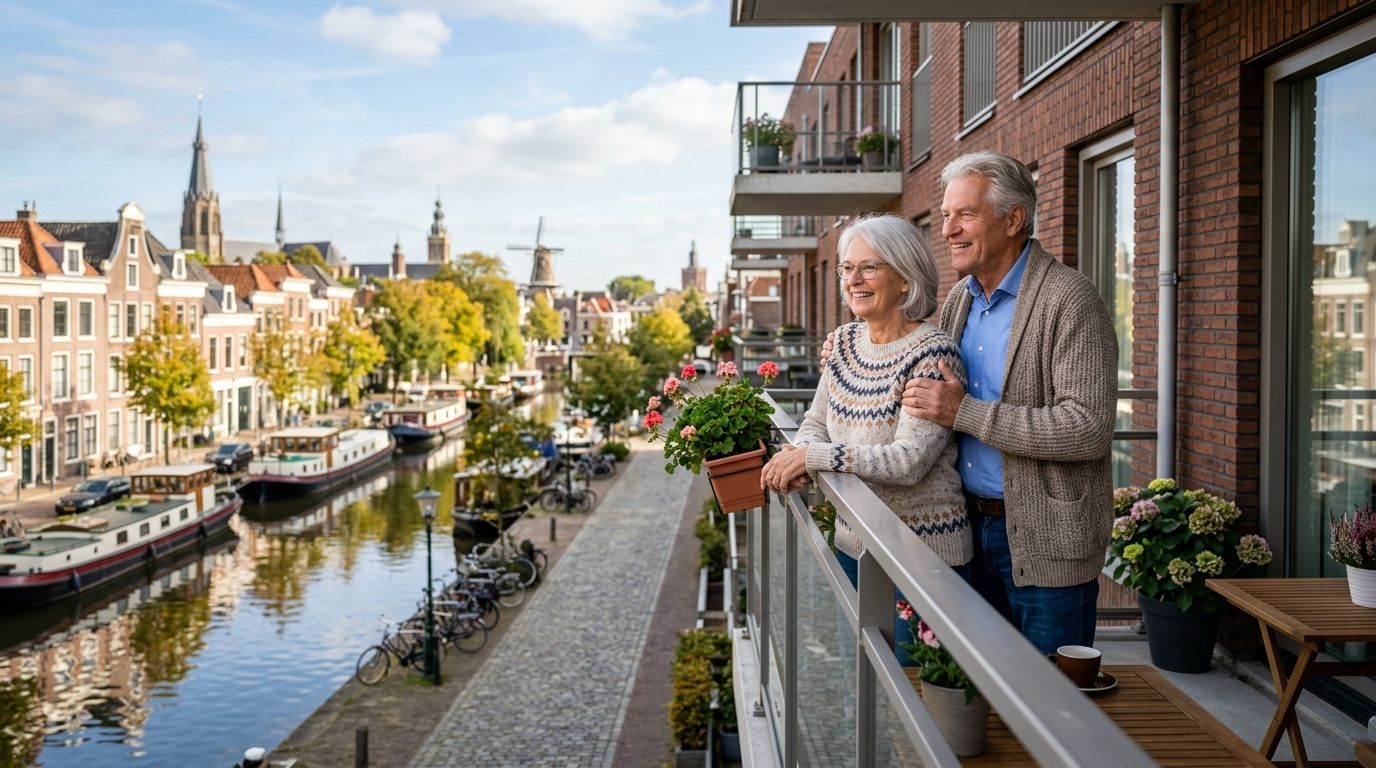
Accessibility is the other variable this segment weighs that younger renters often skip past. A fourth-floor walk-up in a canal house looks charming in photos and becomes a daily problem within a few months.
Confirm your income documentation early
Don't wait until you've found the apartment you want to figure out what proof of income you'll submit. Landlords and agencies in the Netherlands generally want to see income at a multiple of monthly rent, and pension income needs to be presented in a format they recognize.
- Pull recent pension statements covering at least the last few months
- Gather a current bank statement showing available savings
- Convert foreign pension or benefit letters into English or Dutch if they aren't already
- Ask your pension provider for an official letter confirming ongoing payments, not just a screenshot
- Check whether your home country's tax authority can issue an income confirmation letter
Decide whether you need a guarantor
A guarantor isn't just for students and first jobbers. Retirees without a Dutch employer or without several months of Dutch bank history often get asked for one too, especially on properties listed through agencies rather than private landlords.
- Ask a family member with Dutch residency and stable income to act as guarantor
- Look into guarantor companies in the Netherlands that cover expats and retirees without a local co-signer
- Offer several months of rent upfront if the landlord allows it and your cash flow supports it
- Ask whether a larger security deposit satisfies the landlord instead of a guarantor
- Get any guarantor agreement in writing before you sign the lease
Set a real budget for rent, deposit, and monthly costs
Rent is the headline number, but the deposit, utility setup, and any agency fee land in the first month too. Retirees on a fixed income benefit more than most from mapping this out before falling for a listing.
- List your monthly income sources and what share can safely go to rent
- Factor in a deposit that's commonly one to two months' rent, confirmed per listing
- Add municipal taxes and utility connection costs to your first-month math
- Build in a buffer for currency conversion if your income arrives in a foreign currency
- Revisit the number after every few viewings — asking rents shift by city and neighborhood
Filter listings for accessibility, not just location
A great location with three flights of stairs and no elevator isn't a great location for a retiree planning to stay years, not months.
- Search for "elevator" or "lift" explicitly in listing filters rather than assuming it from the building age
- Ask the agent directly whether the building has a lift if the listing doesn't say
- Check for step-free entry at the building's front door, not just inside the unit
- Confirm the bathroom layout — a walk-in shower matters more than a soaking tub for long-term comfort
- Ask about parking or proximity to public transit if driving becomes less appealing over time
View apartments remotely before you commit to a flight
Flying to the Netherlands for a week of viewings is expensive and tiring, and it pressures you into accepting the first decent option you see in person. Retirees relocating from outside Europe have the most to gain from skipping that trip entirely.
- Ask agents for a live video walkthrough before booking any travel
- Use a platform that offers virtual tours to view a Dutch rental apartment remotely as standard, not as a favor
- Request close-up video of stairs, doorways, and bathroom fixtures specifically
- Have someone local walk the neighborhood on your behalf and report back
- Save the recording so you can review it again before signing
Arrange Dutch health insurance before you register
Anyone registering as a resident of the Netherlands is legally required to carry Dutch basic health insurance, and this applies to retirees exactly as it applies to a 28-year-old on a work visa. This isn't optional and it isn't something to leave for after move-in.
- Confirm your timeline — residents must arrange cover shortly after registering with the municipality
- Compare basic policy providers before you land, since paperwork moves faster with an active policy number
- Check whether your home country's retirement plan affects your Dutch coverage obligations
- Keep proof of insurance in the same folder as your lease documents — landlords and municipalities both ask for it
Choose self-service or full-service support
Not every retiree wants to manage lease review, document translation, and landlord back-and-forth alone. Not every retiree wants to hand the whole thing off either.
- Run the search yourself with AI-assisted document review through Relocify Search if you're comfortable managing timelines and communication
- Hand the apartment search, viewings, and negotiation to a team through Relocify Plus if you'd rather not manage it remotely
- Mix the two — search independently, then bring in support just for the lease stage
- Ask any service upfront how it handles pension income verification, since not every platform is built for non-payslip income
Get your Dutch lease reviewed
Have a lease document checked before you sign it from abroad.
Comparison: options for retirees renting in the Netherlands
| Option | Best for | Key limitation |
|---|---|---|
| Relocify Search | Retirees comfortable managing the search themselves with AI document support | Still requires your own time for viewings and communication |
| Relocify Plus | Retirees who want a team to find and sign on their behalf | Less hands-on control over which listings get pursued |
| Local rental agent | Retirees who want an in-person contact in one city | Coverage limited to that agent's local listings and network |
| Direct-to-landlord listings | Retirees targeting a specific building or private owner | No aggregation, no built-in document or scam screening |
Retirees relocating to the Netherlands in 2026 who want to avoid a scouting trip get the most value from a platform built around remote viewing and document review, not a local agent tied to one city.
“If the listing doesn't say the building has a lift, assume it doesn't and ask before you book a viewing.”
Common mistakes retirees make
- Assuming pension income reads the same as a salary — landlords often want it presented differently, and finding that out mid-application costs you the listing.
- Skipping the guarantor conversation because they think it's only for young renters — many agencies apply the same rule regardless of age.
- Choosing a walk-up apartment for the view and regretting it within months — stairs stop being charming fast when they're daily.
- Delaying Dutch health insurance until after move-in — it's a legal requirement tied to municipal registration, not a nice-to-have.
- Booking a viewing trip before checking whether virtual tours are available — that flight is frequently an avoidable expense in 2026.
FAQ
Can retirees rent apartments in the Netherlands without a Dutch employer?
Yes, but landlords typically ask for alternative income proof such as pension statements, savings balances, or a guarantor since there's no payslip to reference. Preparing that documentation before applying speeds up approval significantly.
Do retirees need a guarantor to rent in the Netherlands?
Often yes, especially through agencies rather than private landlords, since retirees without a Dutch employer or local bank history read as higher risk on paper. A family guarantor, a guarantor company, or an upfront rent offer can all serve as substitutes.
Is Dutch health insurance mandatory for retirees relocating to the Netherlands?
Yes, anyone who registers as a resident of the Netherlands is legally required to carry Dutch basic health insurance in 2026. This applies regardless of age or employment status and should be arranged around the same time as your municipal registration.
Can retirees view Dutch rental apartments remotely before moving?
Yes, virtual tours let you walk through a listing over video without traveling, which is common for retirees relocating from outside Europe. Request close-up footage of stairs, entryways, and bathrooms since those details matter most for accessibility.
Are Dutch rental contracts still fixed-term in 2026?
Most new leases for independent housing default to indefinite terms following restrictions on fixed-term contracts for standalone rentals. This benefits retirees planning a long-term stay because it removes annual renewal uncertainty.
What's the difference between Relocify Search and Relocify Plus for retirees?
Relocify Search is a self-managed process with AI-assisted document review for retirees comfortable running their own search. Relocify Plus is an assisted service where a team finds the apartment on your behalf.
Should retirees prioritize ground-floor apartments in the Netherlands?
Ground-floor or elevator-equipped buildings reduce daily friction considerably compared with walk-up units on higher floors. Filter listings specifically for lift access rather than assuming it from the building's age or style.
How much income do Dutch landlords want to see from a retiree?
Landlords commonly ask for income at a multiple of the monthly rent, and the exact multiple varies by landlord and agency. Ask for the specific threshold before applying so you know whether pension income alone clears it.
One last thing
Dutch law now restricts landlords from offering fixed-term contracts on most independent housing, so new leases signed in 2026 typically run indefinitely unless the landlord qualifies for a narrow exception. For retirees planning to settle rather than rotate through short leases, that single regulatory shift removes the biggest source of long-term housing uncertainty in the Dutch rental market — and it's a reason to be pickier about the apartment you choose, because you won't be forced out of it in a year.